
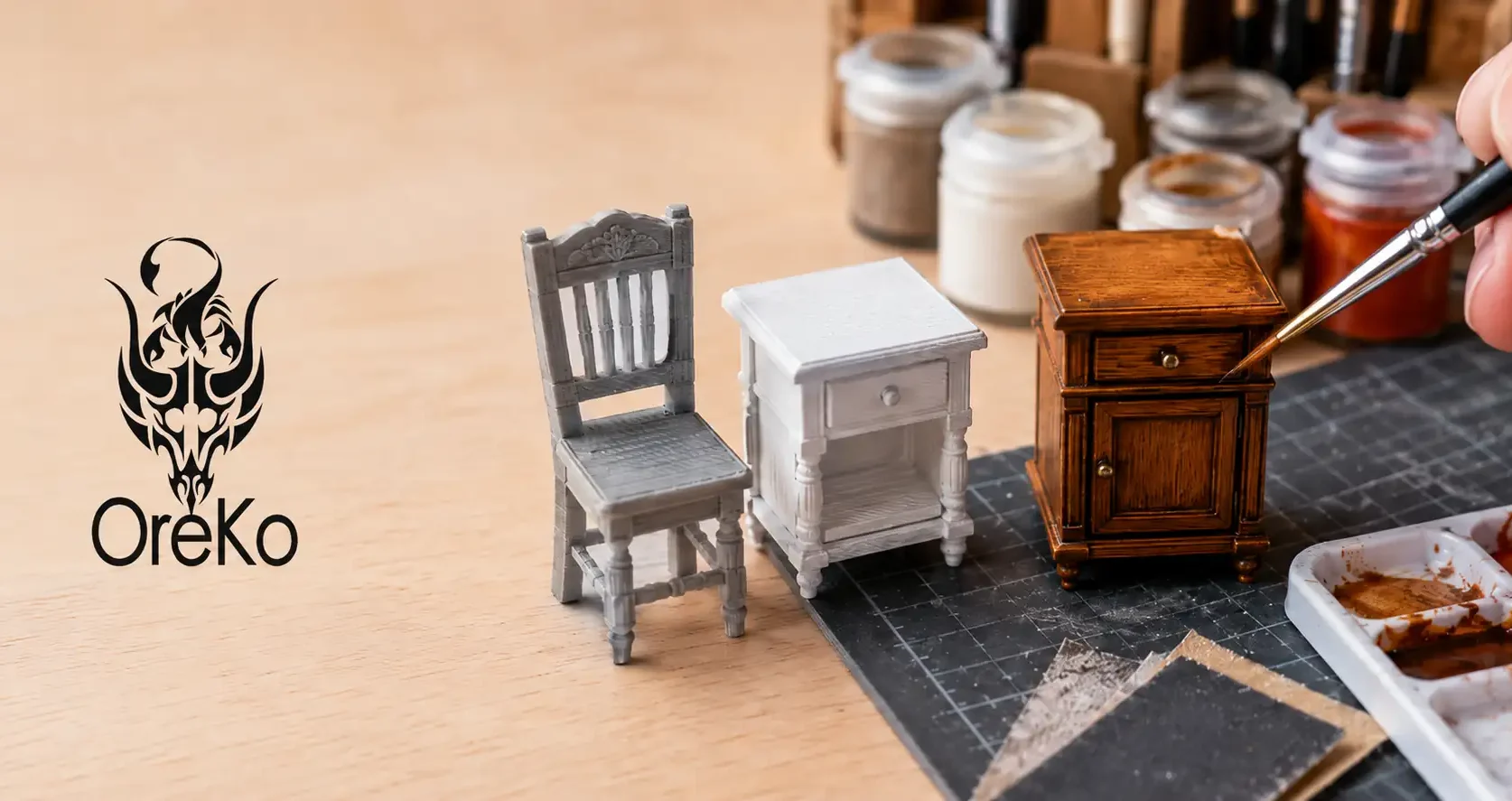
Painting 3D printed dollhouse furniture transforms it. A piece that comes off the printer looking like plastic becomes something that reads as wood, ceramic, metal, or fabric at 1:12 scale. The techniques aren’t complicated, but the sequence matters. Skip a step and the paint chips, looks wrong, or doesn’t adhere at all. Get the sequence right and the result is a convincing miniature that holds up for years.
Before You Paint: Choose the Right Filament
The finishing process starts on the printer. Matte PLA is the right choice for dollhouse furniture you plan to paint. Its textured surface bonds immediately to primer without sanding, produces a more even base coat, and the flat finish doesn’t fight the painted surface for visual attention. We print all our OreKo dollhouse furniture in eSUN Matte PLA — consistent finish across spools, available in the whites, greys, and creams most useful for dollhouse work.
Standard PLA has a slight sheen that can show through light paint coats and resists primer adhesion without sanding first. For furniture that will be painted fully, matte saves a prep step on every piece.
Silk PLA is the exception to paint with: decorative elements like vases, gems, or metallic accessories look better printed in silk and left unpainted than painted over. Plan which pieces need painting and which can rely on the filament’s own finish. OreKo’s window planter model uses exactly this mix: matte PLA for the structural window frame, silk or coloured PLA for the planter itself.
Step 1: Surface Prep
Dollhouse furniture is small. The scale means any surface imperfections are visible in proportion, and paint amplifies rather than hides them. A few minutes of prep produces dramatically better results than painting directly onto the raw print.
- Remove support marks and brim residue. Use a craft knife for any nubs. Fine sandpaper for any remaining marks.
- Sand visible layer lines on curved or prominent surfaces. 220 grit is enough for most PLA dollhouse pieces. You’re smoothing, not reshaping.
- Clean with IPA. Remove sanding dust and finger oils before priming.
For very small intricate pieces like the balusters on the balcony railing set, skip sanding and go straight to primer. The primer fills most micro-texture on well-printed matte PLA, and attempting to sand fine details risks breaking them.
Step 2: Primer
Primer is not optional for painted dollhouse furniture. It seals the PLA surface, fills micro-texture, and creates a uniform base that paint adheres to consistently. Without primer, acrylic paint often beads slightly on PLA, produces uneven coverage, and can peel with handling.
Spray can primer works well for most dollhouse pieces. Rust-Oleum 2X in flat grey or flat white are widely available at hardware stores. Grey primer is better for pieces that will be painted a mid-tone or dark colour. White primer is better for pieces that will be painted pastel or very light colours, where grey undertone might muddy the final colour.
Application: hold the can 25-30cm away, apply two or three thin coats with full drying between each. Thin coats preserve fine detail on small pieces. A heavy single coat obscures fine details like wood grain texture or baluster profiles.
For the finest miniature furniture pieces, brush-on acrylic primer (Vallejo Surface Primer is popular in the miniature painting community) gives more control than spray and is easier to apply on small pieces without losing detail in thick coverage.
Step 3: Base Coat
The base coat establishes the dominant colour of the piece. For dollhouse furniture, acrylic paints give the best combination of control, colour range, and drying time. Craft acrylics (Americana, Folk Art, Apple Barrel) are widely available and inexpensive. Artist-quality acrylics (Golden, Liquitex) give better coverage and more consistent pigment.
Technique for furniture pieces:
- Thin your base coat slightly with water (2-3 drops per pea-sized amount of paint) for smoother brush strokes on flat surfaces
- Apply in the direction of any simulated grain or texture in the model
- Two thin coats always produce a better result than one thick coat
- Let each coat dry completely before the next. Acrylic dries to touch in 20-30 minutes, fully cures in several hours.
Painting Techniques for Miniature Effects
Wood Grain Effect
For furniture that should look like real wood: paint the base coat in mid-brown, let dry fully. Mix a slightly darker shade and apply with a thin fan brush or dry brush in long strokes following the simulated grain direction. The variation in the paint layer creates a convincing wood grain at scale. A final wash of very diluted dark brown (1 part paint to 10 parts water) pooled into recesses and joints adds depth.
White Painted Wood
Classic dollhouse finish. White base coat, then an extremely diluted grey wash (1 part grey to 15 parts water) brushed over the whole piece and immediately blotted, leaving only a faint shadow in recesses and joints. This creates the appearance of slightly aged or worn painted furniture. The miniature windows set looks particularly good in this finish: white body with grey shadow detail on the shutter joints.
Marble Effect
White base coat. Using a very thin brush or a torn piece of plastic bag, drag slightly diluted grey in thin irregular veins across the surface at about 45 degrees. Blur the edges with a clean damp brush immediately. Vary the pressure for irregular vein width. Seal with satin varnish for the correct marble sheen.
Metal Effect
Dark grey or black base. Dry brush silver or metallic over raised surfaces. Works for railings, fixtures, and hardware. The balcony railing set printed in matte black PLA and dry brushed with silver produces a wrought iron appearance that looks convincing in any 1:12 setting.
Step 4: Sealing
A varnish coat protects the paint from handling, prevents chipping, and lets you choose the final sheen level. Dollhouse furniture typically benefits from matte or satin varnish rather than gloss, which can look too plastic at small scale.
Brush-on acrylic varnish (Mod Podge Matte, Vallejo Matte Varnish) gives good control on small pieces. Spray varnish is faster for batches of furniture. Apply one to two thin coats and let cure fully before installing or handling.
For the refrigerator model specifically, a satin varnish finish produces a more convincing appliance appearance than matte. The 1:12 scale refrigerator looks best in gloss white paint with a satin seal, matching the surface finish of a real refrigerator at scale.
Frequently Asked Questions: Painting 3D Printed Dollhouse Furniture
What paint is best for 3D printed dollhouse furniture?
Acrylic paint is the standard choice for 3D printed miniature furniture. It bonds well to primed PLA, dries quickly, cleans up with water, and comes in every colour imaginable. Craft acrylics (Americana, Folk Art) are affordable and widely available. For finest detail work, Vallejo or Citadel miniature paints offer excellent pigment density in small dropper bottles.
Do you need to prime 3D printed miniatures before painting?
Yes. Primer creates a consistent base that paint adheres to reliably. Without it, acrylic paint on PLA can bead slightly, cover unevenly, and peel with handling. Matte PLA takes primer better than standard PLA without sanding first.
How do you paint wood grain on 3D printed dollhouse furniture?
Prime in flat grey. Apply a mid-brown base coat. When dry, dry brush a slightly darker shade in long strokes following any simulated grain direction in the model. Add a very diluted dark brown wash (1 part paint to 10 parts water) into recesses. Seal with matte varnish. The combination of directional dry brushing and wash creates convincing wood grain at 1:12 scale.
What varnish should I use on painted miniature furniture?
Matte or satin varnish for most furniture. Gloss can look too plastic-like on small pieces. Satin works well for appliances and high-gloss furniture like lacquered pieces. Brush-on varnish gives better control on small pieces than spray.
This post contains an affiliate link. If you purchase through it, we earn a small commission at no extra cost to you.