XL Adjustable Mold Box — Silicone, Resin, Plaster & More
240mm & 200mm Versions — 90° Seamless Corners — No Supports — Batch Prints in Under 4 Hours — STL Files Included

240mm & 200mm Versions — 90° Seamless Corners — No Supports — Batch Prints in Under 4 Hours — STL Files Included
⭐ 2,700+ Views • 10 Likes • 16 Sales & Downloads on Cults3D
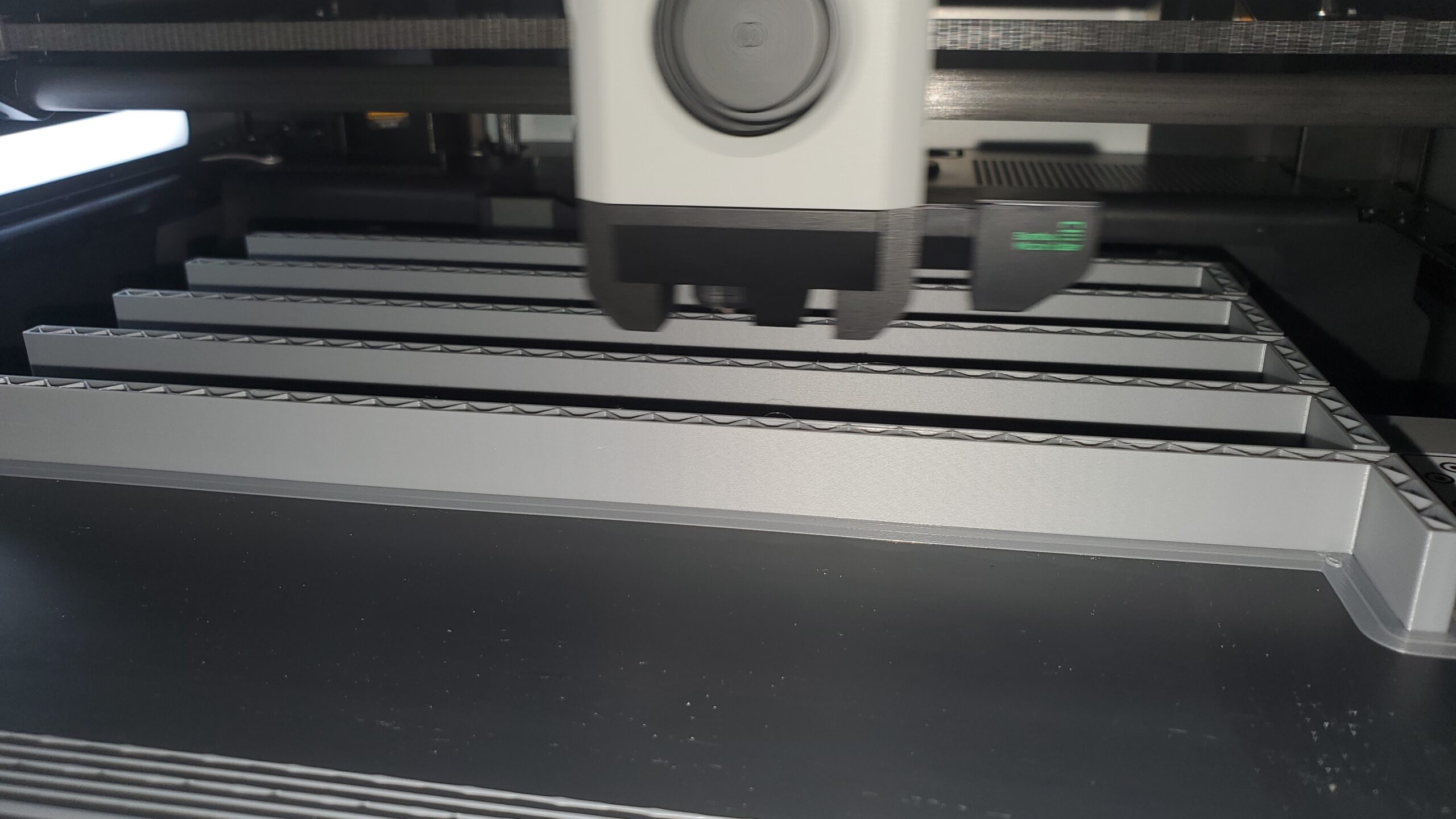
The OreKo XL Adjustable Mold Box is a functional tool designed for makers who work with silicone, resin, plaster, and other casting materials. Rather than buying expensive commercial mold frames or taping together makeshift enclosures that leak at the corners, you print a set of walls and clip them together with standard clips you probably already have.
The design is engineered around two key details that make it work better than most DIY alternatives. First, the corners are designed at exactly 90 degrees for a near-seamless joint that prevents mold material from leaking out. Second, the walls are thick enough at 5mm to stand upright and hold their shape under the weight of poured silicone without brims or special orientation.
Two versions are included: the 240mm version for larger beds (256x256mm or bigger) and the 200mm version for standard beds like the Ender 3 at 220x220mm. Both print at the same wall height of 50mm.
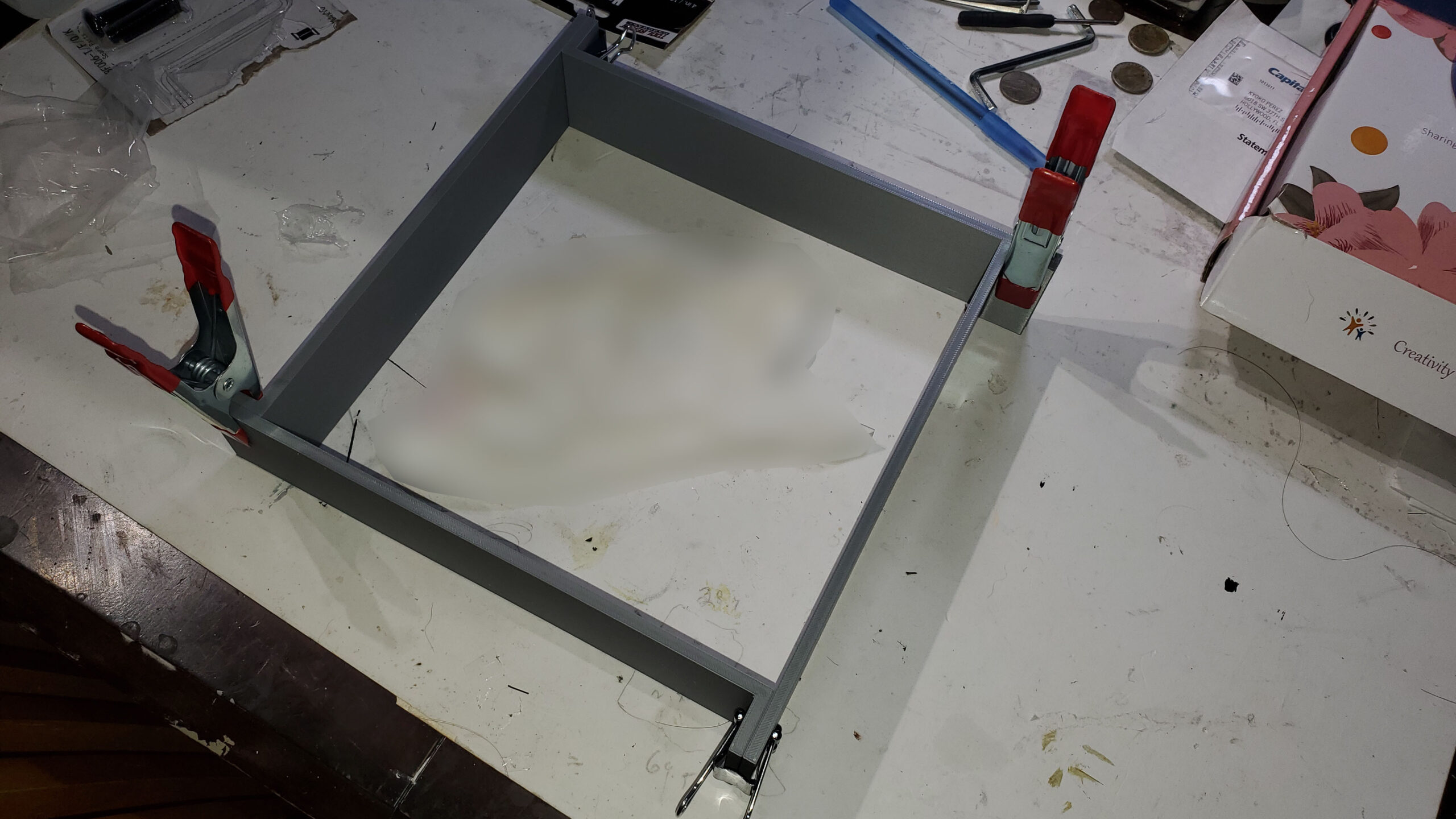
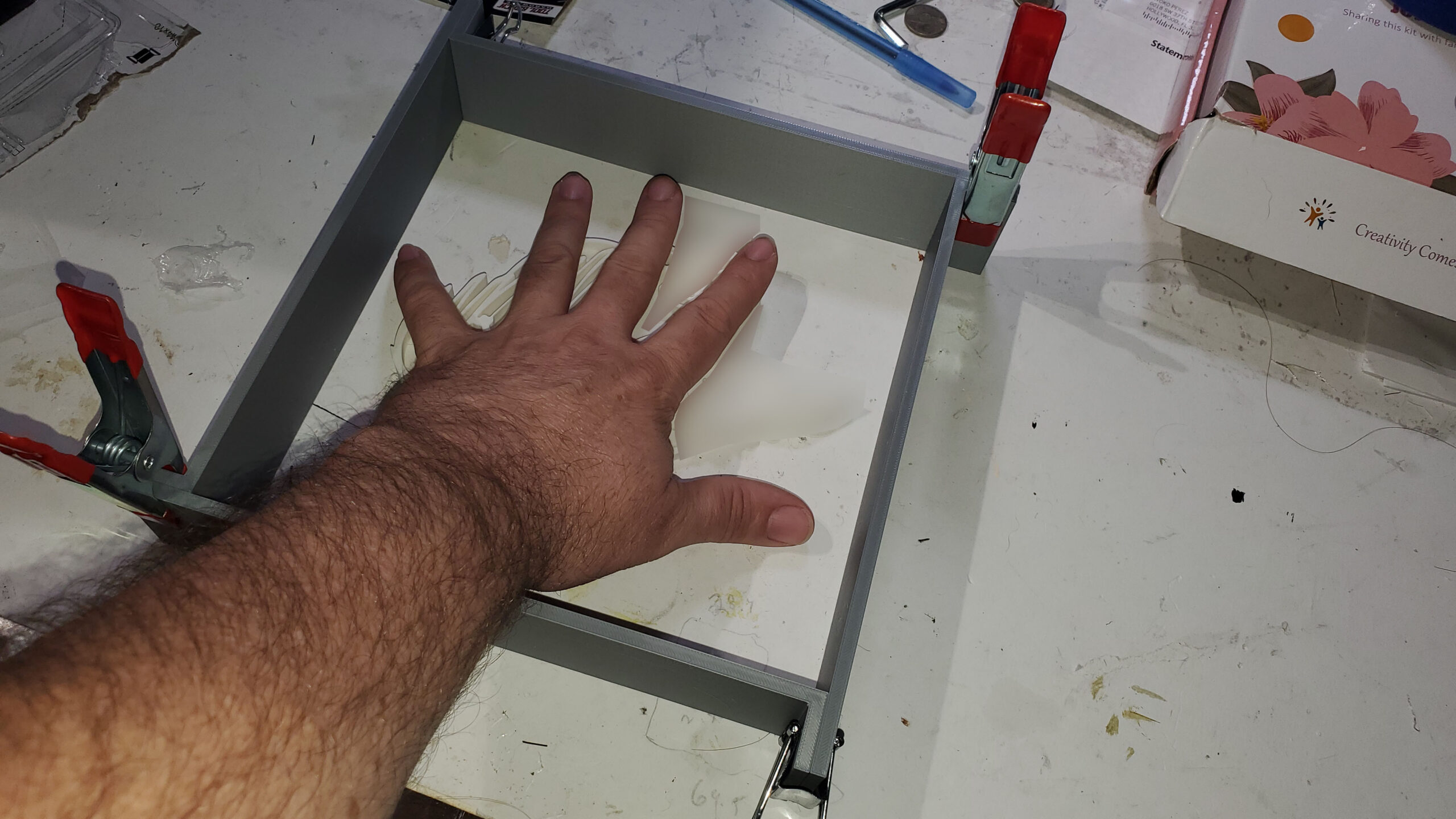
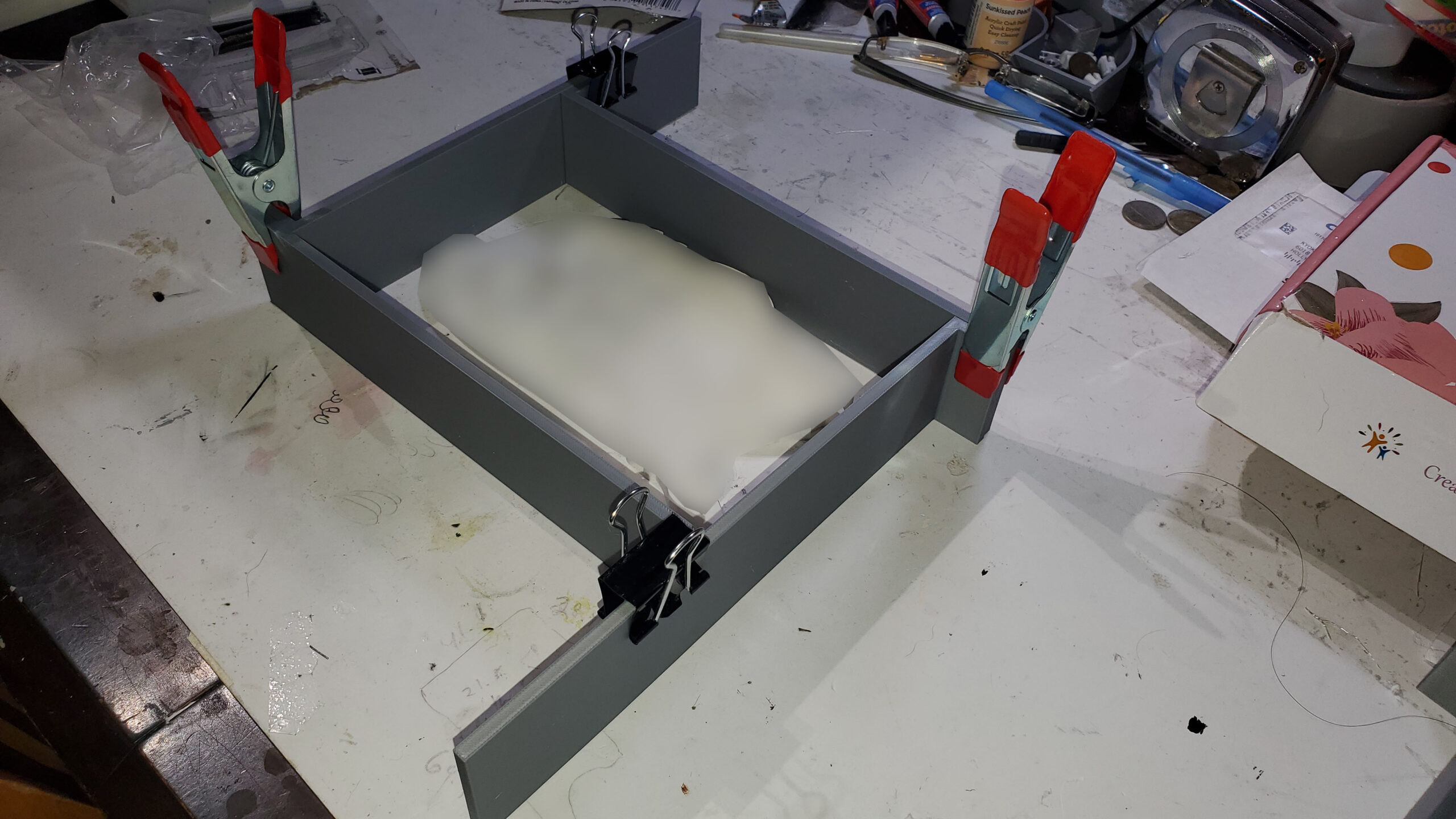
The mold box is a frame system. You print four walls, arrange them into a rectangle around your master object (the item you are making a mold from), and hold the corners together with clips. Pour your silicone, resin, or plaster into the enclosure and let it cure.
Step by step:
The adjustable nature of the system means you can configure the four walls into different rectangle sizes depending on how you arrange them. Combine 240mm and 200mm walls in the same frame for non-square mold dimensions.
| File | Wall Length | Wall Height | Thickness | Minimum Bed Size |
| Super-Mold-Maker-240mm.stl | 240mm | 50mm | 5mm | 256 x 256mm (Bambu A1, X1C, P1S) |
| Super-Mold-Maker-200mm.stl | 200mm | 50mm | 5mm | 220 x 220mm (Ender 3, Prusa MK4) |
0.4mm
Standard. Both versions.
0.08mm to 0.20mm
0.08mm for optimal surface quality. 0.20mm for standard fast prints. For functional mold walls, 0.20mm is perfectly sufficient.
15% to 100%
100% for optimal. 25% for strong. 15% for standard. For mold walls under casting pressure, 25% or higher is recommended.
None required
No supports on either version. Print vertical or horizontal for strongest result.
| Setting | Optimal | Strong | Standard |
| Nozzle | 0.4mm | 0.4mm | 0.4mm |
| Layer Height | 0.08mm | 0.2mm | 0.2mm |
| First Layer | 0.2mm | 0.2mm | 0.2mm |
| Supports | None | None | None |
| Wall Lines | 2 | 6 | 2 |
| Top / Bottom Layers | 9 top / 7 bottom | 5 top / 3 bottom | 5 top / 3 bottom |
| Infill | 100% | 25% | 15% |
| Batch of 5 print time | Longer | ~4 hrs | Under 4 hrs |
For mold frames, the filament choice is about function over appearance.
PLA works well for most casting applications. Silicone does not bond to PLA, making mold release clean and easy. Standard PLA handles the compression from clips and the weight of poured silicone without issue at room temperature.
PETG is the upgrade if your casting process involves heat. Some silicone systems require slightly elevated temperatures to cure. PETG handles up to 80°C versus PLA’s 60°C, giving more margin for warm casting environments.
ABS offers the highest heat resistance but is overkill for most hobbyist casting. Requires an enclosed printer and more complex settings.
For most makers: standard PLA at the strong settings (6 wall lines, 25% infill) is the right choice. It is what these walls were designed and tested with.
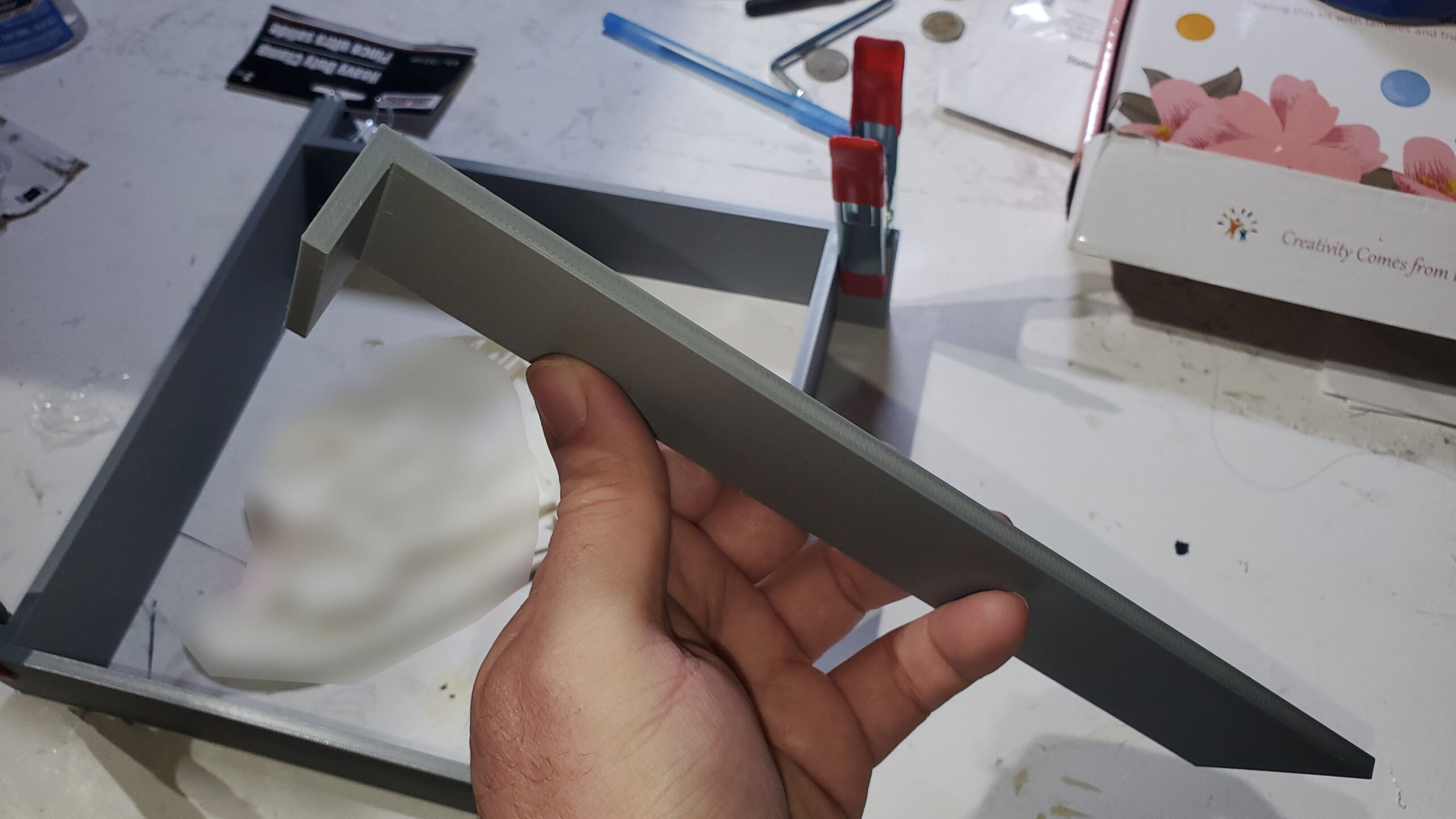
Seal the base before pouring. Place the frame on a smooth flat surface — a piece of glass, an acrylic sheet, or a silicone mat. The 90° corners minimize leakage but a small bead of clay or mold putty along the base edge inside the frame gives you a leak-free seal.
Use a release agent on the walls. A light coat of petroleum jelly, mold release spray, or Vaseline on the inner faces of the walls makes the cured silicone or resin release cleanly without sticking to the PLA surface.
For deep molds, stack walls. At 50mm height, a single layer of walls works for most masters. For objects taller than 40mm, print a second set of walls and stack them to double the usable mold depth.
Don’t overtighten the clips. The walls need to hold square under the weight of the pour, not be crushed together. Standard binder clip tension is exactly right. Dollar store spring clips also work and are easier to open with one hand during pouring.
The OreKo mold box frame works as a containment system for a wide range of casting materials:
Silicone rubber: The primary use case. Pour two-part silicone around a master object to create a flexible mold for resin casting, candle making, soap making, or food-safe applications (with food-safe silicone).
Resin: Pour UV or two-part epoxy resin directly into the frame with a master embedded to create solid resin casts, coasters, paperweights, or decorative panels.
Plaster / Hydrocal: Excellent for making rigid molds or casting architectural detail pieces. Plaster releases cleanly from PLA walls.
Concrete: For small decorative concrete pieces, plant pots, and garden ornaments. The walls handle the weight of concrete mix without flexing if printed at the strong settings.
Soap and candle wax: Low-temperature casting materials that work well with PLA walls at standard settings.
240mm version requires 256x256mm bed. 200mm version fits any 220x220mm bed. Both tested and confirmed.
Bambu X1C
Tested. 240mm & 200mm.
Bambu A1 / P1S
240mm & 200mm.
Creality Ender 3
200mm version only.
Prusa MK4
200mm version fits. 240mm version fits on 250×210 bed.
Any 220x220mm+ bed
200mm version works on all standard FDM printers.
240mm and 200mm versions included. No supports. 5 walls print in under 4 hours. Designed and tested by OreKo in South Florida.