Where to Find Free STL Files: The Honest Guide
There are hundreds of thousands of free 3D printable files online. Here is where to find them, what makes each platform worth using, and what to watch out for before you hit print.
There are hundreds of thousands of free 3D printable files online. Here is where to find them, what makes each platform worth using, and what to watch out for before you hit print.
Most websites claiming to list “the best free STL sites” are monetised through affiliate links or sponsored placements. The recommendations tend to cluster around platforms that pay referral commissions rather than platforms that actually have the best files.
This guide is different. There are no affiliate links here. The platforms below are listed because they are genuinely useful, and the honest drawbacks are included alongside the strengths.
Owned by: Prusa Research
Cost: Free, account required to download
Size: Several million models
Printables is currently the highest-quality free repository available. Prusa Research runs a points-based reward system that pays designers for popular uploads, which has attracted serious designers who also sell on paid platforms. The result is a free library with a noticeably higher proportion of tested, well-documented models than older platforms.
Search and filtering are strong. Profiles show all models from a designer in one place. Print settings documentation is more common here than on most platforms. The community is active and reviews tend to be useful.
Best for: Everything. If you start one place, start here.
Owned by: MakerBot (now Stratasys)
Cost: Free, account required
Size: Over 3 million models, the largest archive
Thingiverse was the first major consumer-facing STL repository and still holds the largest catalog of free models. If something exists as a printable design, there is a good chance it is on Thingiverse. The sheer volume is the main advantage.
The platform has declined in maintenance and user experience over the years. Search results are inconsistent, outdated files are common, and many popular designs have been superseded by better versions on newer platforms. Quality varies enormously. Reader comments are often the best quality indicator — a design with years of “printed perfectly, thanks!” comments is more reliable than star ratings alone.
Best for: Finding designs that no longer exist elsewhere, legacy designs with large communities.
Owned by: Bambu Lab
Cost: Free, Bambu account required
Size: Growing rapidly, millions of models
Bambu Lab’s answer to Printables, launched in 2023 and growing fast. MakerWorld has two features that distinguish it from other free platforms: verified print profiles tested on Bambu hardware, and a reward system that generates real print data. Popular models show how many people printed them and with what settings on which Bambu printers.
The platform is Bambu-centric. Files are often provided as 3MF with Bambu Studio settings pre-configured, which is excellent if you have a Bambu printer and meaningless if you do not. Non-Bambu users can still download the STL or 3MF geometry but will need to configure settings themselves.
Best for: Bambu Lab printer owners who want settings-ready files.
Owned by: Independent
Cost: Mix of free and paid models
Size: Over 1 million models
Cults3D is primarily known as a paid marketplace but hosts a significant number of free models. The free section tends toward better quality than fully-free platforms because the same designers who sell paid work also release free models as a portfolio and community contribution.
Licensing is clearly displayed on every listing. The search is strong. Designer profiles show full catalogs making it easy to find more work from creators you trust. The platform has been active since 2014 with consistent maintenance.
Best for: Finding high-quality free models from designers who also sell, especially in niche categories like miniatures, props, and functional prints.
Owned by: Physna
Cost: Free, account required
Size: Large, aggregates from multiple sources
Thangs is the only platform with a geometric search feature — you can upload an STL and find visually similar models across its database. Useful when you have a partial design and want to find related components, or when you want to see variations of a specific type of object.
The catalog aggregates models from Thingiverse, Printables, and other sources, which makes it large but also inconsistent in quality. The geometric search is the genuine differentiator that no other platform offers.
Best for: Finding similar models to one you already have, or searching by shape rather than keyword.
Owned by: US National Institutes of Health
Cost: Completely free
Size: Smaller, specialized
A specialized repository from the US government containing scientifically validated 3D models: anatomical structures, medical devices, lab equipment, and scientific visualization tools. The models are rigorously reviewed before publication. If you need a medically or scientifically accurate model for educational or research purposes, this is the most reliable source available.
Best for: Anatomical models, educational science prints, medical education.
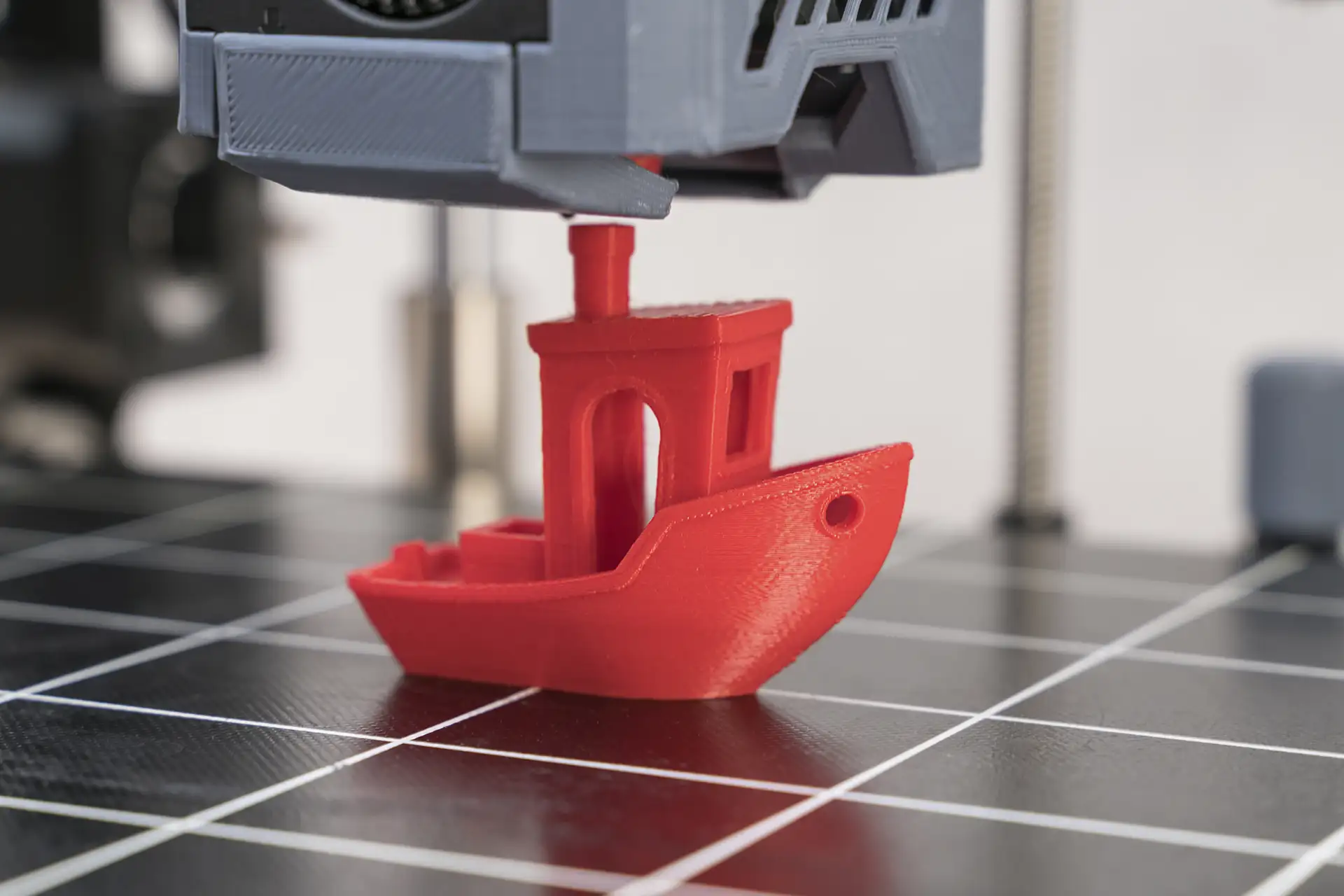
The platform matters less than the individual listing. A well-documented file on Thingiverse beats a bare upload on Printables. These signals separate reliable files from ones that may waste your time and filament.
Photos of actual prints, not renders. This is the single most important signal. A render shows what the designer hopes the model looks like. A photo of a printed result shows what your printer will produce. If every image on a listing looks like a 3D software render with perfect lighting and no visible layer lines, treat the file as untested.
Specific print settings documented. Layer height, infill, supports (or lack of), wall count, material. A designer who has printed their own model knows these numbers. Vague instructions like “print at standard settings” suggest the designer has not personally validated the file.
Update history with changelogs. A file that has been updated based on feedback is a file whose designer is paying attention to how it performs on real printers. Multiple updates over time is a strong signal of quality and ongoing support.
Designer who responds to comments. Check the comments section. Does the designer reply to questions about print settings or fit issues? Engaged designers produce more reliable files and fix problems when they are reported.
Reviews that mention actual printing. “Great model!” tells you nothing. “Printed on Bambu A1 at 0.12mm, fit together perfectly” tells you the file works. Look for reviews that include specifics about the print, not just enthusiasm about the design.
| Platform | Best For | Biggest Strength | Main Limitation |
| Printables | Everything, all printers | Highest average quality, active community | Still smaller catalog than Thingiverse |
| Thingiverse | Finding legacy designs | Largest archive, broadest topic coverage | Poor maintenance, inconsistent quality |
| MakerWorld | Bambu Lab printer owners | Verified Bambu print profiles, real print data | Bambu-centric, less useful for other printers |
| Cults3D (free section) | Niche categories, higher quality free files | Clear licensing, strong designer profiles | Smaller free catalog than dedicated free platforms |
| Thangs | Finding models by shape | Geometric search, aggregates multiple sources | Quality inconsistent from aggregated sources |
| NIH 3D Print Exchange | Scientific and medical models | Scientifically validated, government-backed | Very specific subject matter |
Free files are not automatically worse than paid ones, and paid files are not automatically better. The quality difference comes from the designer, not the price.
What paid platforms tend to have more of: designers who depend on file sales for income and therefore have strong incentives to produce tested, documented, supported work. A designer selling files on Cults3D knows that bad reviews hurt future sales, so they test their models, respond to issues, and push updates.
What free platforms have: enormous volume, a strong community of generous designers, and many files that are just as well-made as anything on paid platforms. Some of the best-documented, most actively maintained models online are free.
The honest answer is that the individual file matters more than the platform or the price. A free file from a designer with 10 models, all photographed with documented settings and active comment responses, is more reliable than a paid file from a designer who uploaded once and disappeared.
When evaluating any STL file — free or paid — see the full quality checklist at How STL Files Work.
Yes, for personal use in almost all cases. Free files on major platforms are published under licenses that explicitly allow personal printing. The distinction that matters is commercial use: printing an item for personal use is almost universally permitted under free licenses. Selling printed copies of someone else’s design requires either a commercial license or specific permission from the designer. Always check the license shown on the listing before commercial printing.
The quality of an STL file depends entirely on how carefully it was designed, whether it was actually printed and tested, and whether the designer fixed issues based on feedback. A file from a serious designer who printed it themselves, validated the tolerances, and published documented settings will print better than a file someone modeled in an afternoon and uploaded without testing. The platform the file is on has almost nothing to do with it.
Printables is currently the strongest recommendation for most users and most printers. The quality average is higher than Thingiverse, the community is active, and the reward system has attracted serious designers. If you own a Bambu Lab printer, MakerWorld is worth using alongside Printables because of its verified Bambu print profiles. Thingiverse is worth searching when you cannot find something elsewhere due to the sheer size of its archive.
It depends on the license. Most Creative Commons licenses allow redistribution as long as you credit the original designer and do not use the file commercially. Some licenses prohibit redistribution entirely. Some allow redistribution only if you apply the same license to any remixed version. The license is displayed on every listing on major platforms. Read it before sharing, remixing, or publishing derivations of any file.
What the STL format cannot tell you about a file, and why documentation from the designer matters so much.
Understanding the triangle mesh format and the watertight requirement that determines whether a downloaded file will actually slice correctly.
Why some platforms now offer 3MF alongside STL and what the difference means when you download and print.