
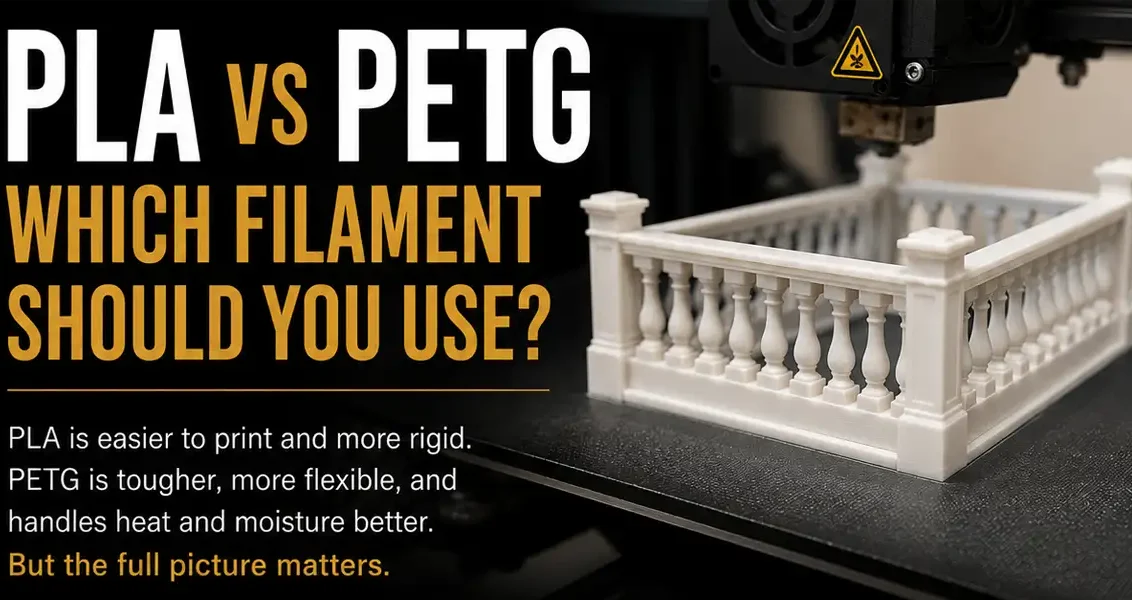
The Short Answer
Start with PLA. Every time. No exceptions for your first 20 to 30 prints.
That is not a knock on PETG. PETG is an excellent material. It is stronger, more heat-resistant, and more flexible than PLA. But those advantages do not matter when you are still learning how to level a bed, dial in first-layer adhesion, and troubleshoot a clog at midnight.
PLA is forgiving. PETG is not. Here is everything you need to know about both so you can make the right call for where you are right now.
What Is PLA?
PLA stands for Polylactic Acid. It is made from plant-based sources, typically corn starch or sugarcane, which is part of why it became the default filament for home 3D printing. Low odor, easy to work with, and biodegradable.
In practical terms: PLA is what virtually every beginner printer ships with a sample spool of, because it works out of the box on almost any machine at almost any temperature. You load it, slice with default settings, and hit print. It just works.
Best uses for PLA:
- Decorative prints and display pieces
- Prototypes and test prints
- Card game accessories and deck boxes
- Dollhouse miniatures and scale models
- Indoor functional prints that won’t see heat or stress
- Anything you’re printing for the first time
What Is PETG?
PETG stands for Polyethylene Terephthalate Glycol. It is a modified version of the same plastic used in water bottles, with the glycol added to reduce brittleness and improve printability.
PETG sits between PLA and ABS on the scale of difficulty. Tougher than PLA, easier than ABS. Its main strength is impact resistance and heat tolerance. A PETG print won’t warp or soften if it gets left in a hot car. A PLA print will.
Best uses for PETG:
- Functional parts that need to flex without snapping
- Outdoor prints exposed to sunlight and heat
- Mechanical components and snap-fit parts
- Phone cases and wearables
- Anything stored in a hot environment
- Load-bearing brackets and mounts
Head-to-Head Comparison
| Property | PLA | PETG |
| Print Temperature | 190-220°C | 230-250°C |
| Bed Temperature | 0-60°C (often none needed) | 70-85°C (required) |
| Difficulty for Beginners | Very easy | Moderate |
| Strength | Good | Better |
| Heat Resistance | Low (~60°C) | Medium (~80°C) |
| Flexibility | Brittle | Slightly flexible |
| Stringing | Low | Higher (requires tuning) |
| Bed Adhesion | Easy | Can stick too well |
| Odor While Printing | Mild, sweet-ish | Mild plastic smell |
| Price (approx.) | $15-25 per kg | $18-30 per kg |
| Recommended For | Beginners, decorative, miniatures | Functional parts, outdoor, high-heat |
Why PLA Wins for Beginners
The biggest difference between PLA and PETG isn’t strength or heat resistance. It is the skill required to print them well.
With PLA, default slicer settings work on day one. On a Bambu Lab printer, you can load PLA, select the preset, and get a clean print with zero tuning. On an Ender 3, experienced users give the same advice: use PLA first, learn the machine, then switch when you have a specific reason to.
With PETG, you need to dial in retraction carefully to avoid stringing. You need a heated bed. You need to manage bed adhesion so it doesn’t stick too hard to smooth PEI and pull off the surface when you remove the print. None of these are impossible, but they add variables when you are still learning the basics.
Get 20-30 successful PLA prints under your belt first. You will know when you are ready to switch.
When to Switch to PETG
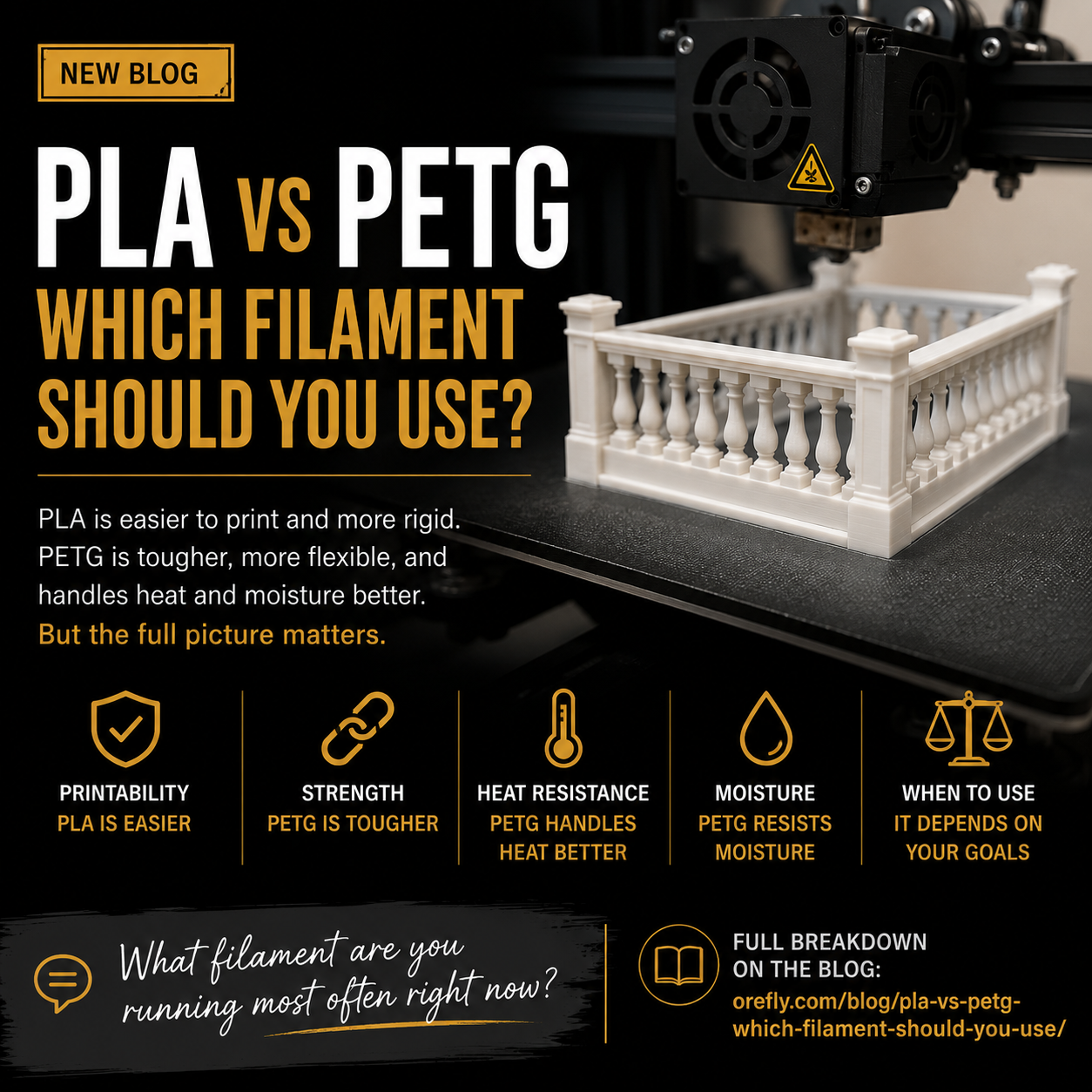
You don’t need PETG until you have a specific reason. Here are the situations where the switch is worth it:
Your print will live outdoors. PLA degrades in UV sunlight and softens in heat. If you are printing a plant holder, a mailbox clip, or a bracket that mounts outside, PETG is the right call.
Your print will sit in a hot car. PLA starts to deform around 60°C. A summer car can easily hit that temperature. PETG handles up to around 80°C without distortion.
You need impact resistance. PLA is brittle. Drop a PLA print hard enough and it cracks. PETG has enough flex to absorb impact without shattering.
You are printing functional mechanical parts. Brackets, hinges, load-bearing clips. Anything under regular stress benefits from PETG’s toughness.
For card game accessories, dollhouse miniatures, display pieces, and most decorative prints, PLA is all you will ever need.
Practical PETG Tips (When You’re Ready)
When you do make the switch, a few settings changes make a real difference:
Slow down retraction speed. PETG strings aggressively at fast retraction speeds. Start conservative and tune from there.
Use a textured PEI bed surface. PETG bonds hard to smooth PEI. Textured PEI gives a good grip without the risk of pulling the coating off when you remove your print.
Drop print speed slightly. PETG flows differently than PLA. Slowing from 200mm/s to 150mm/s on your first print gives the layers more time to bond cleanly.
Store it dry. PETG absorbs moisture from the air faster than PLA. If you hear crackling or popping from the nozzle during a print, the filament is wet. Dry it at 65°C for 4-6 hours before your next session.
What OreKo Models Are Printed In
All OreKo sample prints are produced in standard PLA. Deck boxes, dollhouse miniatures, mold frames, door signs, all PLA, all printed on Bambu Lab FDM printers at 0.20mm layer height with no special settings. This means every model in the OreKo catalog is beginner-friendly from a materials standpoint.
If you want extra durability on a functional print like the adjustable mold box, PETG is a solid upgrade. But PLA will get you 95% of the way there on everything else.