
3D Printing for Dollhouse Miniatures: Where to Start
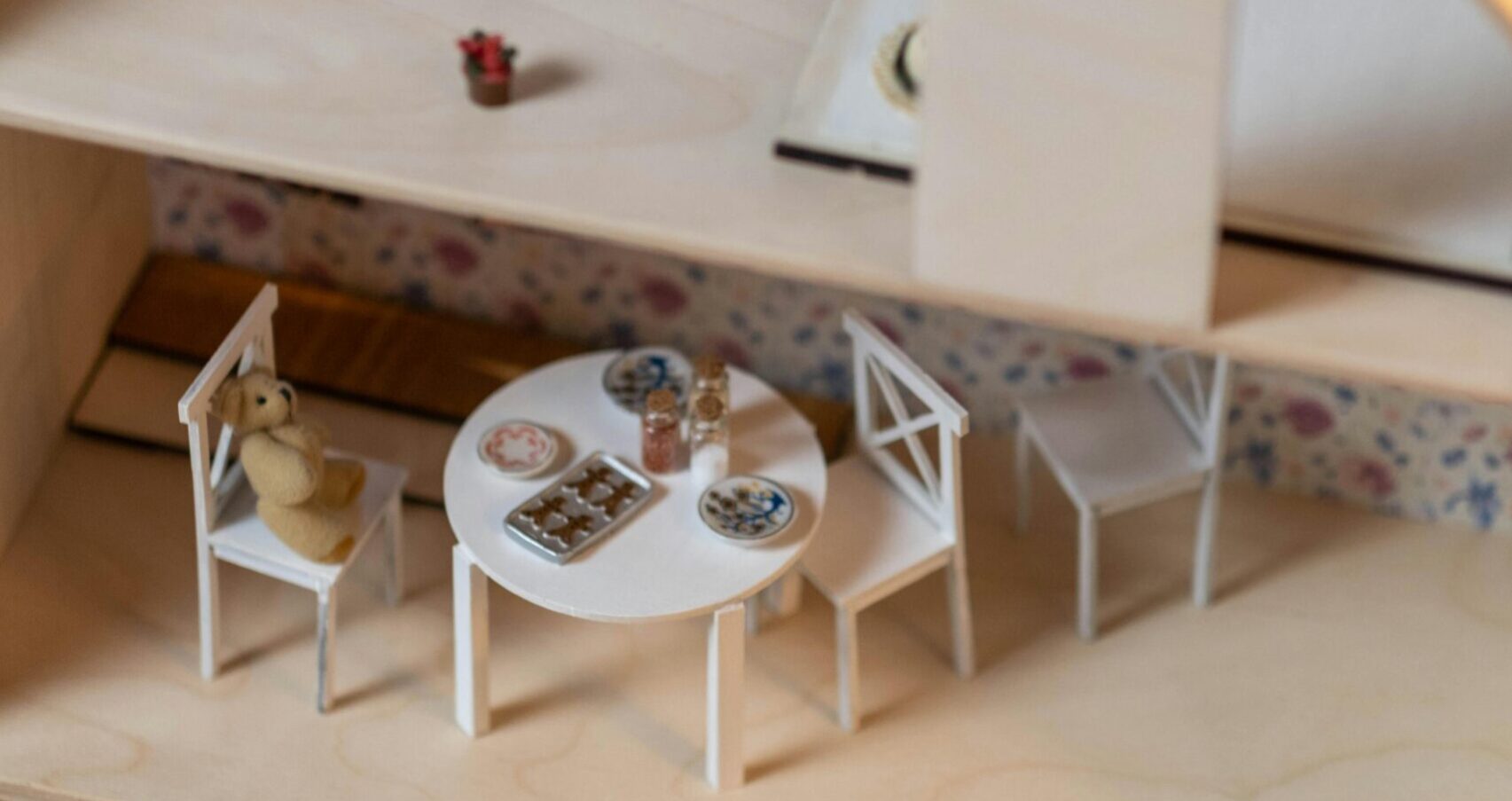
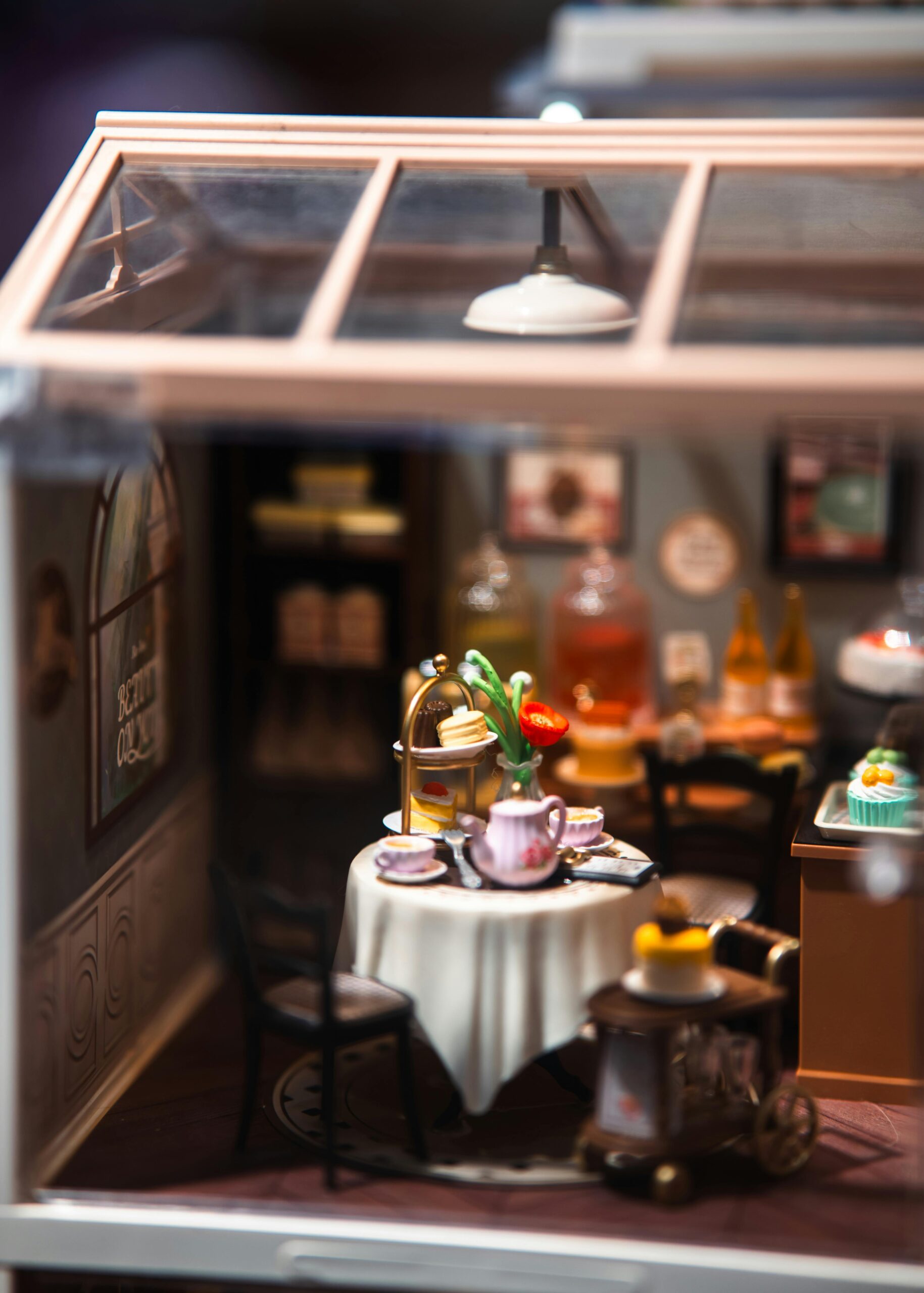
3D printing and dollhouse building are a natural match. Miniature furniture, architectural details, appliances, and decorative pieces that would cost a fortune to buy commercially can be printed at home for cents in filament. The challenge is knowing how to get them right.
Dollhouse miniatures push the limits of FDM printing more than almost any other category. Small parts, fine details, thin walls, and precise dimensions all require more careful settings than a standard print. Here is what you need to know before your first miniature print.
What Makes Miniature Printing Different
Standard 3D prints are forgiving. A deck box or a mold frame at 0.20mm layer height looks perfectly fine. Dollhouse miniatures are different because they are designed to be viewed close up, handled carefully, and placed in scenes where proportion and surface quality matter.
The main challenges:
Scale precision. A 1:12 scale refrigerator needs to be dimensionally accurate to look right next to other 1:12 furniture. Printer calibration matters more here than for decorative prints.
Thin walls. Window frames, shutter slats, and decorative moldings are often just 1-2mm thick. At 0.20mm layer height these can look rough. At 0.12mm they look clean and precise.
Small moving parts. Working hinges, shutters that open and close, and press-fit joints require tight tolerances. The difference between a shutter that moves smoothly and one that snaps off is often just a fraction of a millimeter.
Surface finish. Layer lines that are invisible on a deck box are visible on a smooth miniature appliance surface. Finer layer heights reduce this significantly.
Recommended Settings for Dollhouse Miniatures
How you set up your slicer makes the biggest difference in miniature quality. These are the settings we use across OreKo dollhouse files.
Layer Height
0.12mm to 0.16mm
Drop below 0.20mm for most miniature work. 0.16mm gives a good balance of quality and print time. 0.12mm for detail-critical pieces like window frames and furniture faces.
Infill
100% for small parts, 15% for large bodies
Small pieces like shutter pins, handles, and thin decorative elements need 100% infill to hold their shape. Large hollow bodies like the refrigerator carcass print fine at 15%.
Wall Lines
3 to 4 walls
One or two extra perimeters compared to standard prints adds meaningful strength to thin-walled miniature parts without significantly increasing print time.
Print Speed
Slower on small parts
Reduce print speed on small intricate pieces. Fast print speeds on tiny parts give the plastic less time to cool, which blurs fine features. Most slicers have a minimum layer time setting specifically for this.
Which Printer Is Best for Dollhouse Miniatures?
FDM printers work well for 1:12 scale miniatures, especially for furniture and architectural pieces where surfaces are relatively flat. You do not need a resin printer to get great dollhouse results from well-designed FDM files.
Bambu Lab A1 / A1 Mini / P1S: Excellent choice. Fast auto-calibration, consistent first layers, and Bambu Studio’s built-in support for fine layer heights. The A1 Mini’s compact build volume is perfectly adequate for most miniature pieces.
Prusa MK4 / MINI+: Reliable and well-calibrated out of the box. The MINI+ is particularly popular with miniature hobbyists for its precision and active community.
Creality Ender 3 Series: Works well for miniatures with some tuning. Print in a draft-free environment for the most consistent results.
Resin printers: If you want the absolute highest level of detail, a resin printer takes miniature quality to a different level. But FDM produces excellent results at 1:12 scale and OreKo files are designed and tested for FDM.
Filament Choice for Miniatures
PLA is the right starting point for dollhouse miniatures. It is easy to print, holds fine detail well, and comes in colors that match real-world furniture finishes: white for appliances, wood tones for furniture, grey for architectural elements.
Silk PLA deserves a mention here. Silk PLA has a subtle sheen that makes surfaces look smoother and more finished than standard matte PLA. For miniature furniture that should look polished and premium, silk PLA at 0.12mm layer height produces a noticeably more refined result.
Avoid PETG for miniatures unless you have a specific reason. The stringing PETG produces at fine scales is harder to clean up on small parts, and the slightly softer surface can pick up marks more easily than PLA.
Post-Processing Miniatures
Even with fine settings, some finishing work can elevate your miniature prints:
Light sanding: 400-grit sandpaper on flat surfaces smooths layer lines significantly. Work up to 800-1000 grit for a near-seamless finish. Sand gently, miniature walls are thin.
Priming: A light coat of white or grey filler primer fills micro-surface imperfections and creates a uniform base for painting. Krylon or Rust-Oleum filler primer works well on PLA.
Painting: Acrylic hobby paints (Citadel, Army Painter, Vallejo) work excellently on primed PLA. For appliance white, use satin or semi-gloss finish rather than flat for a more realistic look.
Assembly: Thin super glue (Loctite, Zap-a-Gap) bonds PLA parts cleanly. Apply sparingly with a pin or toothpick on joining surfaces. Avoid getting any on finished painted surfaces.
OreKo Dollhouse Miniatures in the Catalog
The OreKo miniature lineup covers several key pieces for dollhouse builders:
Refrigerator Side-by-Side (1:12 & 1:16 scale) — a modern appliance with opening doors and no supports needed. Uses 1.75mm filament as hinge pins.
Miniature Windows with Working Shutters — three shutter style variations. Working shutters using filament pins. Print at 0.12mm for full detail.
Dollhouse Balcony & Balustrade Railing Set — porch railing and balcony components designed for 1:12 scale construction.
Miniature Window with Shutters & Planter — a single window unit with integrated planter box detail.
All pieces are support-free by design and tested on FDM printers.