
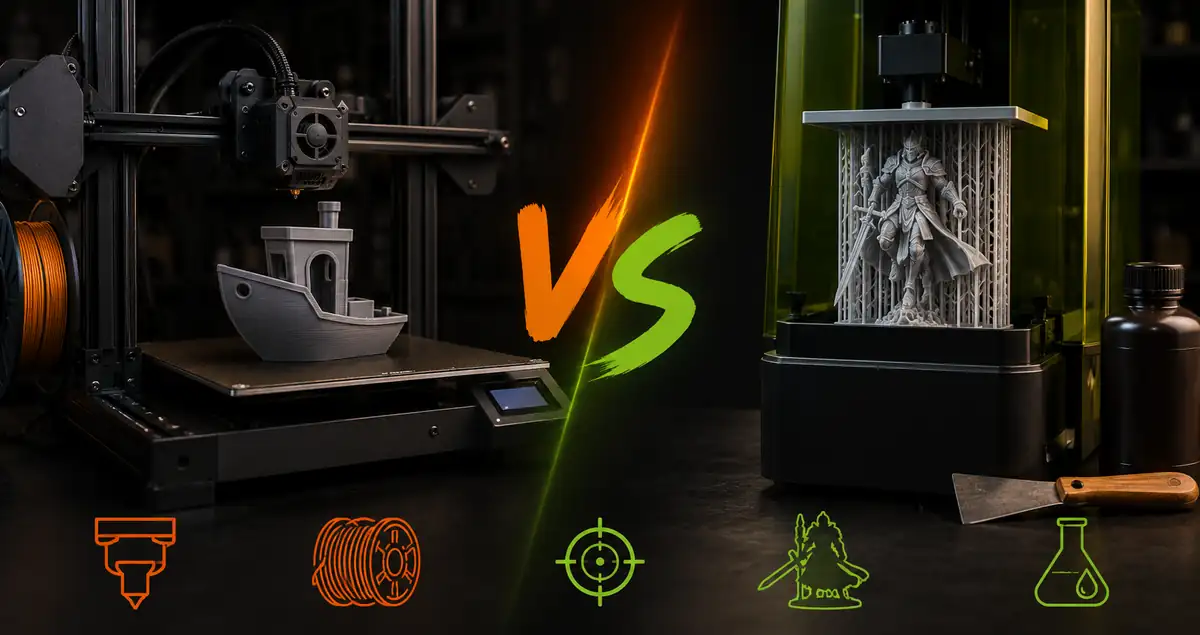
Two Very Different Technologies
FDM and resin 3D printing both build objects layer by layer, but that is roughly where the similarities end. The materials are different, the machines work differently, the post-processing is different, and the results look different.
Choosing the wrong type for your project is a real mistake. Here is the honest breakdown of both so you can make the right call.
FDM: How It Works
Fused Deposition Modeling (FDM) printers melt plastic filament and deposit it through a heated nozzle. The nozzle moves across the build plate in precise patterns, laying down one layer at a time. Each layer bonds to the one below as it cools, building the object from the bottom up.
Filament comes in spools, costs $15-30 per kilogram, and is available in dozens of materials: PLA, PETG, ABS, TPU, carbon fiber composites, and more. The most popular materials are non-toxic, low-odor, and safe to use in a home or office.
FDM is best for:
- Beginners and first-time printer owners
- Large prints (deck boxes, mold frames, signs)
- Functional parts that need strength
- Multi-color prints with an AMS system
- Long print runs and high volume
- Affordable material costs
Resin: How It Works
Resin printers (MSLA, SLA, DLP) work by curing liquid photopolymer resin with UV light. A screen or laser exposes each layer of the build plate to light, hardening the resin in the shape of that layer. The build plate lifts incrementally, peeling each cured layer from the FEP film at the bottom of the resin vat.
Resin produces dramatically smoother surfaces and finer detail than FDM. A resin print at standard settings can capture details that an FDM printer at 0.08mm would struggle to match. The trade-off is that resin printing requires ventilation, gloves, and a UV curing station for post-processing.
Resin is best for:
- Highly detailed miniatures and figurines
- Jewelry and dental models
- Small, intricate parts where surface smoothness matters
- Experienced users comfortable with chemical handling
- Collectors and display-quality prints
FDM vs Resin: Direct Comparison
| Factor | FDM | Resin |
| Print Quality | Good — visible layer lines on curves | Excellent — very smooth surfaces |
| Detail Level | Good for most uses | Exceptional — sub-millimeter features |
| Build Volume | Large (250x250mm+) | Small-medium (130x80mm typical) |
| Material Cost | $15-30 per kg | $25-50 per litre |
| Post Processing | Minimal — remove supports if any | Wash in IPA, UV cure station required |
| Safety | Generally safe, low odor (PLA) | Requires ventilation and gloves |
| Beginner Friendliness | Very high | Moderate |
| Printer Price | $150-2,500+ | $150-800+ |
| Multi-Color | Yes, with AMS system | Not typically |
For OreKo Models: FDM Is the Right Choice
Every model in the OreKo catalog is designed and tested on FDM printers. The deck boxes, mold frames, door signs, and dollhouse miniatures all print cleanly on standard FDM machines with PLA filament.
For the 1:12 scale miniatures, FDM at 0.12mm-0.16mm layer height produces excellent results. The windows, shutters, and refrigerator all come out with the level of detail that makes them look realistic at dollhouse scale. You do not need a resin printer to get great results from these files.
If you own both printer types, resin can take the miniatures to an even higher level of detail. But FDM is entirely sufficient and is what the files were designed and tested on.
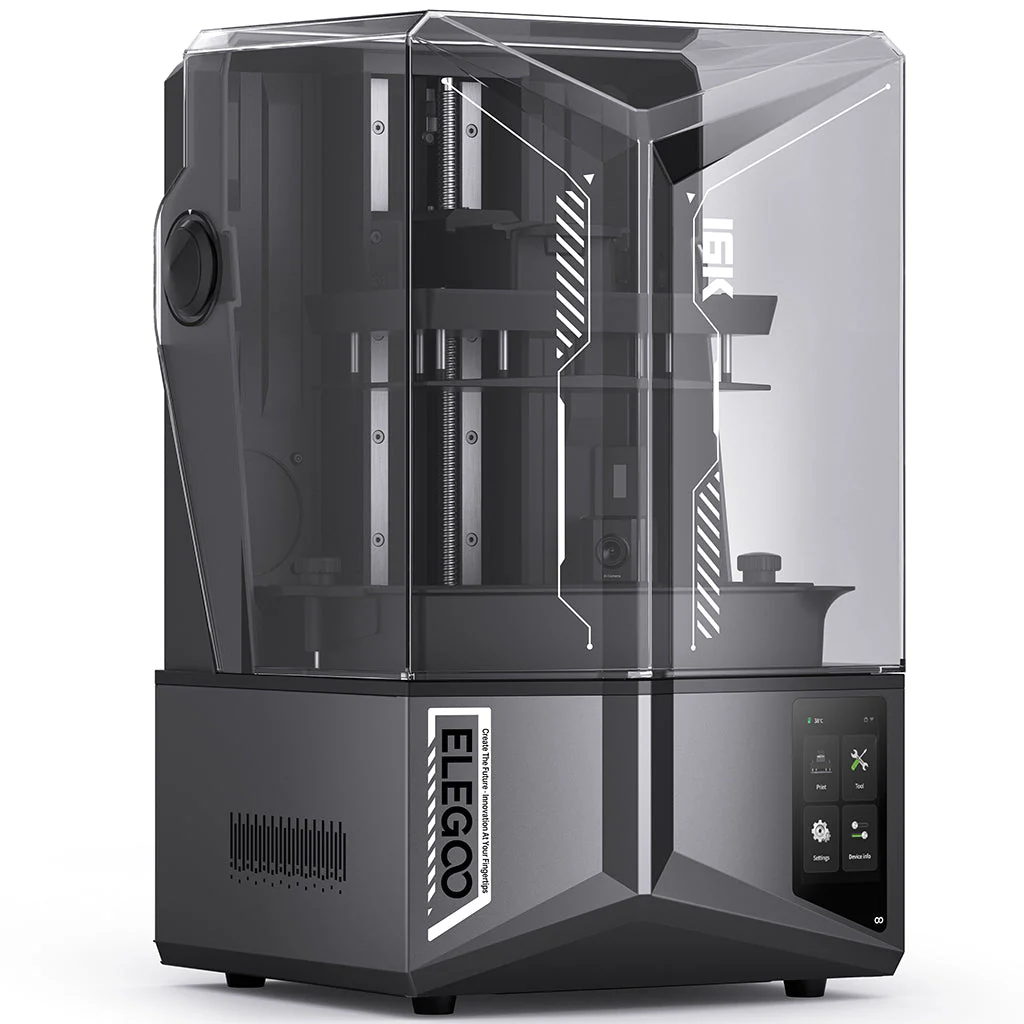
Should You Own Both?
Many serious hobbyists end up with one of each, and for good reason. They solve different problems.
FDM handles the practical everyday work: deck boxes, tools, large models, functional parts, and anything that needs to be a specific size. Resin handles the prestige work: highly detailed figurines, jewelry, and display pieces where surface quality is the priority.
If you are choosing your first printer, start with FDM. The learning curve is gentler, the materials are cheaper, the build volumes are larger, and it handles the widest range of use cases. Add resin later if you find yourself consistently wanting more surface detail than FDM provides.
The Resin Safety Checklist
If you do go the resin route, these are non-negotiable:
Ventilation. Uncured resin produces fumes that cause headaches and respiratory irritation. Print in a ventilated space or use an enclosure with an active carbon filter.
Nitrile gloves. Liquid resin is a skin sensitizer. Repeated skin contact can cause allergic reactions that worsen over time. Always wear gloves when handling resin or uncured prints.
UV curing station. Prints straight off the build plate are not fully cured and remain somewhat flexible and tacky. A UV curing station hardens them to their final strength and makes them safe to handle without gloves.
IPA washing. Prints need to be washed in isopropyl alcohol to remove uncured resin from the surface before curing. A wash-and-cure station automates this.
OreKo Models Print Great on Any FDM Printer
All files tested on Bambu Lab FDM printers. Download, slice, and print.