
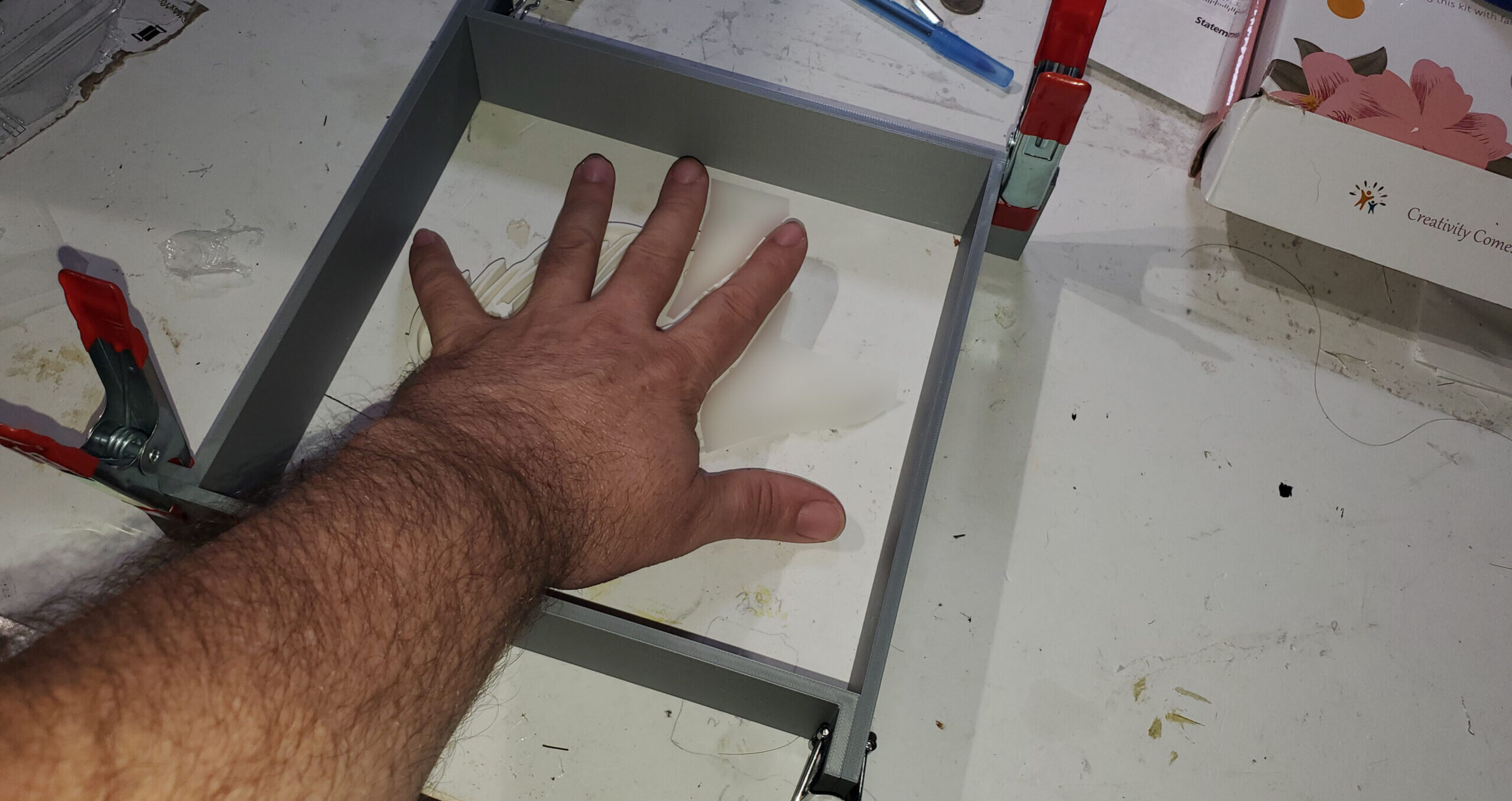
Making a silicone mold requires a mold box: a container that holds the object being molded and the liquid silicone poured around it. A 3D printed adjustable mold box is one of the most useful tools you can have in a mold-making setup. It replaces purpose-built commercial frames that cost more and can’t be sized to your specific object. This guide covers how to use a 3D printed mold box effectively, from setup through pouring, curing, and demoulding.
What Is a Mold Box and Why It Matters
A mold box is the container that defines the outer shape of your silicone mold. The object you’re reproducing sits inside the box, silicone is poured around it, and when cured the silicone block contains a perfect negative impression of the original. The mold box itself doesn’t become part of the final mold; it’s just the form that holds everything in place during the pour.
A well-designed mold box needs to be watertight, adjustable to different object sizes, easy to disassemble after curing, and able to withstand the heat generated by curing silicone without deforming. PLA handles most silicone curing temperatures without issue for standard room-temperature cure silicones. For platinum-cure silicones that generate more heat, PETG is a safer choice for the mold box material.
The OreKo XL Adjustable Mold Box
The OreKo XL Adjustable Mold Box (2,700+ views, 16 purchases on Cults3D) is a wall-and-clip system that assembles into rectangular mold boxes of variable dimensions. The walls clip together at corners and can be stacked for taller molds. The adjustable format means one set of printed parts covers a wide range of object sizes rather than requiring a new box for each project.
Key features of the design:
- Four wall panels that clip together at 90-degree corners
- Stackable height adjustment for taller objects
- Smooth inner surfaces that release cured silicone cleanly
- Designed to print flat without supports in PLA or PETG
- Corner clips that hold walls watertight under liquid silicone pour pressure
Step-by-Step: Making a Silicone Mold with a 3D Printed Box
- Print and assemble the mold box. Size the assembled box so it’s at least 10-15mm larger than your object on each side. This gives adequate silicone wall thickness around the object for a strong, stable mold.
- Seal the mold box base. Press the assembled box onto a flat silicone mat, sheet of glass, or piece of foam board. The base needs to be watertight. If the wall-to-base join isn’t completely sealed, silicone will leak under the walls. A thin bead of hot glue or clay along the exterior base join seals it completely without permanent adhesion.
- Prepare the master object. The object being molded needs to be sealed and release-coated. Porous objects (unsealed PLA, wood, clay) absorb silicone and bond to the mold. Apply a thin coat of petroleum jelly (Vaseline), Mann Ease Release spray, or similar release agent to the surface. For PLA masters, this also prevents the silicone from bonding to the plastic.
- Position the object in the box. For a one-part mold: place the object face-up on the base. For a block mold of a flat object: center it on the base.
- Calculate silicone volume. Measure the internal dimensions of the box in centimetres. Box volume (length x width x height in cm) minus object volume equals approximate silicone needed in cubic centimetres (approximately equal to millilitres at silicone density close to 1g/ml). Add 10% for waste and measurement error.
- Mix silicone according to manufacturer instructions. Weigh parts A and B accurately. Mix thoroughly for the stated time (usually 3-5 minutes). Avoid whipping air into the mix.
- Pour slowly from one corner. A thin stream from a height lets bubbles escape before the silicone reaches the object. Fill to 10-15mm above the highest point of the object.
- Cure fully. Room-temperature cure silicones (Smooth-On OOMOO, Mold Star series) cure in 4-6 hours at room temperature. Resist the urge to demould early. Undercured silicone tears.
- Disassemble the mold box and demould. Unclip the box walls, lift the silicone block, and gently flex the mold to release the original object. The release agent applied in step 3 makes this clean. The mold is ready to use immediately.
What You Can Cast in a Silicone Mold
A cured silicone mold works with a wide range of casting materials:
| Casting Material | Result | Notes |
|---|---|---|
| Resin (two-part urethane or epoxy) | Rigid or semi-rigid plastic copies | Most common. Multiple colors possible with dye. |
| Concrete / cement | Decorative concrete pieces | Good for garden ornaments, planters, tiles. |
| Plaster / gypsum | White plaster casts | Cheap and fast. Lower durability than resin. |
| Soap | Custom shaped soap bars | Popular craft application. Pour at below 65°C to protect PLA mold box. |
| Chocolate / candy | Food-safe casts in platinum silicone only | Requires food-grade platinum silicone, not tin-cure. |
Frequently Asked Questions: 3D Printed Mold Box Silicone Making
Can you use PLA for a silicone mold box?
Yes. Standard room-temperature cure silicones generate minimal heat during curing (typically staying below 40°C) and PLA’s heat deflection temperature of around 60°C provides adequate margin. For faster-cure or heat-accelerated silicones that may reach 50-60°C, PETG (heat deflection around 75°C) is safer. For standard hobby silicones like Smooth-On OOMOO or Mold Star, PLA works reliably.
What silicone should I use for a first mold?
Smooth-On OOMOO 25 or OOMOO 30 is the standard recommendation for beginners. It’s a tin-cure silicone that doesn’t require vacuum degassing, has a long pot life, and demoulds cleanly. It’s available from art supply and specialty craft retailers in trial and full-size kits.
How do I stop silicone leaking from the mold box?
Seal the box base with a thin bead of hot glue or clay on the exterior base join before pouring. The inner walls of a well-fitted printed box should be watertight once assembled. Press the box firmly onto a flat surface before sealing to ensure contact with the base is consistent.
How many casts can I get from one silicone mold?
A silicone mold typically produces 20-50+ casts with resin before showing significant wear, depending on the casting material, release agent use, and mold geometry. Molds with complex undercuts wear faster than simple shapes. Applying release agent to the mold interior before every pour extends mold life.