
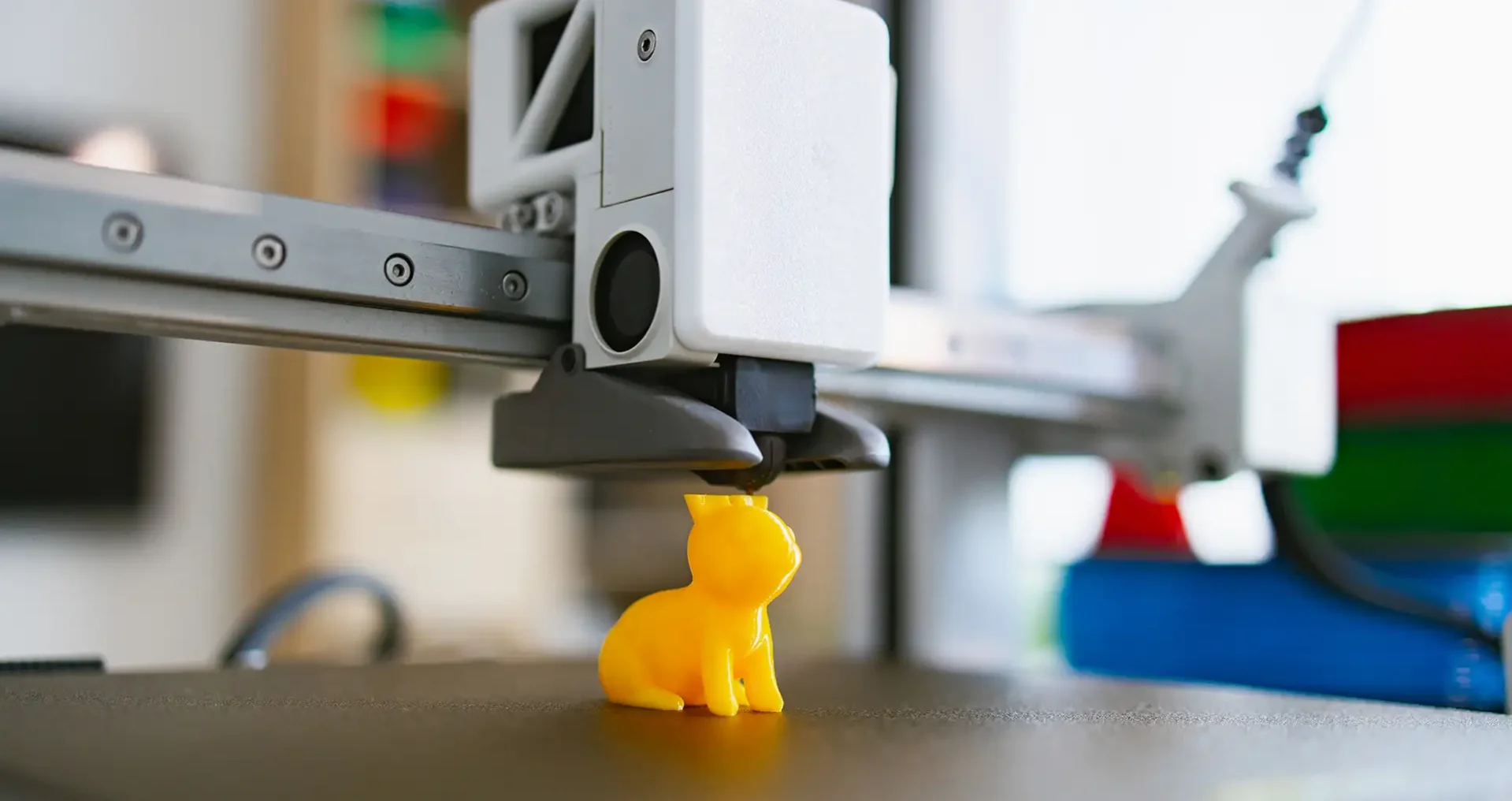
The print bed is the flat surface your 3D printer builds on. Everything starts there. The first layer bonds to the bed surface, and every subsequent layer bonds to the one before it. If the first layer doesn’t stick to the bed correctly, the print fails. Understanding the print bed, what it’s made of, and how to keep it working is fundamental to reliable FDM printing.
Print Bed Types and Materials
The standard in 2026 is PEI-coated spring steel. A magnetic sheet attaches to the printer’s heated aluminum plate, and the PEI coating on the spring steel surface provides excellent adhesion at print temperature and clean release when cooled. PEI spring steel comes in two variants: smooth (for a glossy print bottom) and textured (for a matte, slightly rough finish that grips more consistently).
Older printers use borosilicate glass beds, which give a very flat surface and a glossy print bottom. They work well but require adhesion aids (glue stick or hairspray) more often than PEI. Bare aluminum beds are found on the cheapest machines and need coating or adhesive for reliable adhesion.
Heated vs Unheated Beds
A heated bed keeps the first layers warm during printing, preventing differential cooling that causes warping. Most modern printers have heated beds. For PLA, 55-60°C is the standard. For PETG, 75-85°C. For ABS and ASA, 100-110°C.
Unheated beds can work for very small PLA prints, but warping on larger prints is common. If your printer has a heated bed, use it. Full details on the relationship between bed temperature and adhesion are in the bed adhesion guide.
Frequently Asked Questions: 3D Printer Print Bed
What is the print bed on a 3D printer?
The flat surface the printer builds objects on. The first layer deposits directly onto the bed surface, and every subsequent layer bonds to the one before. Print bed material, temperature, and cleanliness are the primary factors controlling first layer adhesion.
What is PEI and why do most printers use it?
PEI (polyetherimide) is a thermoplastic material with properties that make it excellent for 3D printing surfaces. It grips plastic firmly at print temperature and releases cleanly when cooled, without adhesion aids for most standard materials. PEI spring steel is the current standard on most mid-range and premium FDM printers.
How do I clean a 3D printer bed?
Wipe with isopropyl alcohol (70-90%) on a lint-free cloth before every print. This removes skin oils that reduce adhesion. For deep cleaning, wash with dish soap and warm water. More on cleaning and bed prep at the bed adhesion guide.