
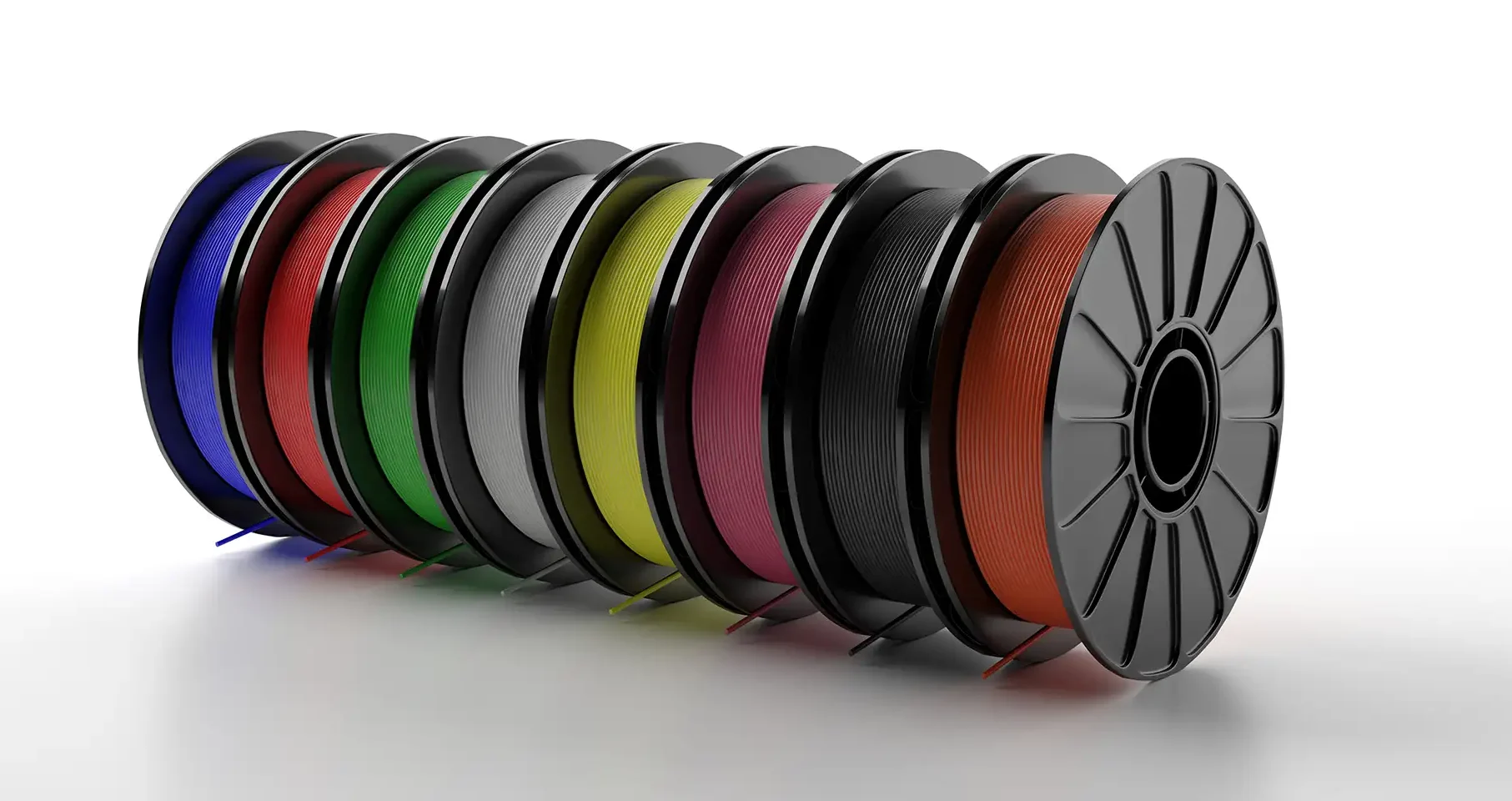
Choosing the right filament comes down to one question: what does this part need to do? If it’s a display piece that doesn’t move, PLA is the answer. If it needs to flex, you need PETG or TPU. If it lives outdoors in Florida sun, you need ASA. This guide maps every common use case to the right material so you don’t waste a spool learning the hard way.
Use-Case to Filament Guide
For display models, cosplay props, deck boxes, dollhouse parts, and anything that lives indoors at room temperature: use matte PLA for painted pieces, standard PLA for unpainted, or silk PLA for pieces you want to look glossy without painting. We use eSUN filament across all three PLA types — consistent results, wide color range, available direct.
For functional parts under load (brackets, clips, hinges, snap-fits): PETG handles impact and slight flex better than PLA. Don’t use PLA for parts that will be stressed repeatedly.
For outdoor use, car storage, or anything exposed to heat above 60°C: ASA for UV resistance and heat tolerance. PETG as a middle ground. Never PLA for anything left in a parked car on a Florida summer day.
For flexible parts (straps, living hinges, vibration dampeners): TPU. Nothing else achieves the same flexible-yet-durable performance.
The PLA vs PETG comparison covers the most common material decision in detail.
Surface Finish Considerations
Matte PLA has a rough textured surface that primer and paint bond to without sanding. Use it for everything you plan to paint. Standard PLA has a slight sheen that takes primer adequately but benefits from light sanding first. Silk PLA produces a glossy satin finish that looks like ceramic or metal when printed in appropriate colors. Choose the finish based on whether the part gets painted or displayed as-printed.
Frequently Asked Questions: Choosing 3D Printing Filament
What filament should a beginner use?
PLA. It prints at the lowest temperature, warps least, smells mildest, and is available in the widest range of colors. Start with PLA, learn your printer’s behavior, then add other materials when a specific project needs their properties.
What is the strongest 3D printing filament?
Depends on the type of strength. PETG is tougher under impact than PLA. ABS and ASA have better heat resistance. Nylon has excellent fatigue resistance. Carbon fiber PLA is stiffer than standard PLA but more brittle under impact. For most hobby applications, PETG provides the best all-round strength improvement over PLA.
Is matte PLA better than standard PLA for painting?
Yes, significantly. Matte PLA’s textured surface bonds to primer immediately without sanding. Standard PLA needs light sanding to create equivalent primer adhesion. For any print you plan to paint, matte PLA saves a preparation step on every piece. See the matte filament guide for a full breakdown of how the surface difference works in practice.
This post contains an affiliate link. If you purchase through it, we earn a small commission at no extra cost to you.