Skip to content
Facebook page opens in new windowInstagram page opens in new window
Search:
Ore Fly
Your Home for 3D Printing & 3D Printable Models
Ore Fly
  • Home
  • About
  • 3D Models
    • Miniatures
      • Top Freezer Refrigerator Dollhouse 1:12 Scale STL – Classic Miniature Fridge
      • Refrigerator Side-by-Side Dollhouse 1:12 Scale STL
      • Miniature Windows with Working Shutters Set STL
      • Dollhouse Balcony Balustrade Porch Railing Set STL
      • Miniature Window with Shutters and Planter STL
    • Deck Boxes
      • Deck Maker Set One Piece Card Game Deck Box STL
      • One Piece Deck Box – Jolly Roger Luffy & Gear 5 STL
      • MTG Fallout Deck Box Magic The Gathering STL
      • MTG Modern Horizons 3 Eldrazi Incursion Deck Box Standard Size STL
      • MTG Modern Horizons 3 Eldrazi Incursion Deck Box Dual Sleeve STL
    • Cosplay & Tools
      • Lollipop Chainsaw Chain Links STL – Cosplay Prop
      • XL Adjustable Mold Box STL – Silicone Resin Plaster Mold Frame
  • 3D Printing
    • The Basics
      • How Does 3D Printing Actually Work? The Full Process Explained
      • FDM 3D Printers: How They Work and Which to Choose
      • What Is a 3D Printing Slicer? How It Works and Which to Use
      • What Is 3D Modeling? A Complete Beginner’s Guide
      • Resin 3D Printing: SLA and MSLA Explained
      • 3D Printing Filament
    • Getting Started
      • What Is 3D Modeling? How to Design Files for 3D Printing
      • What Is Slicing in 3D Printing? A Complete Guide
      • How to Slice a 3D Model — Slicing Software and Settings Explained
      • 3D Printing Supports: What They Are and When You Need Them
      • 3D Printing Infill: Patterns, Percentages, and When to Use Each
      • SLS 3D Printing: What It Is and How It Works
    • Advanced
      • 3D Printing Layer Height Explained: How to Choose the Right Value
      • 3D Print Bed Adhesion: How to Get the First Layer Right Every Time
      • 3D Printer Nozzles: Sizes, Materials, and When to Upgrade
      • 3D Print Post Processing: Sanding, Painting, and Finishing Your Prints
      • What Is G-Code in 3D Printing? The Complete Beginner’s Guide
  • 3D Printers
    • 3D Printing Overview
    • Bambu Lab 3D Printers
      • Bambu Lab H Series 3D Printers: H2S, H2D and H2C Guide
      • Bambu Lab X Series 3D Printers: X2D Full Guide
      • Bambu Lab P Series 3D Printers: P2S and P1S Guide
      • Bambu Lab A Series 3D Printers: A2L, A1 and A1 Mini Guide
    • Creality 3D Printers
      • Creality Ender-3 V3 SE Review and Specs
      • Creality Ender-3 V3 Plus Review and Specs
      • Creality SparkX i7 Review and Specs
      • Creality K1C 2025 Review and Specs
      • Creality K1 Max Review and Specs
      • Creality K2 Plus Review and Specs
    • Prusa Research 3D Printers
    • Elegoo 3D Printers
  • Filament
    • 3D Printing Filaments
    • PLA Filament
      • PLA Filament Overview
      • Matte PLA Filament
      • PLA+ Filament
      • Silk PLA Filament
      • Specialty PLA Filaments
    • PETG Filament
      • PETG Filament Overview
      • Clear PETG Filament
      • PETG-CF Filament
    • TPU Filament
      • 3D Printed TPU Phone Cases
      • TPU Shore Hardness Guide
    • ABS and ASA Filament
  • STL
    • The Basics
      • STL Files Overview
      • How STL Files Work: Triangles, Meshes, and Why It Matters
      • What Does STL Stand For? The Full History
    • Getting Started
      • How to Choose a Good STL File Before You Print It
      • How to Create Your Own STL Files: Where to Start
      • Where to Find Free STL Files: The Honest Guide
      • STL File Limitations: What the Format Cannot Do
    • Advanced
      • 3MF vs STL: What Is the Difference and Which Should You Use?
      • 3D Printing File Formats Beyond STL: OBJ, AMF, STEP, 3MF, and More
      • STL File Licenses Explained: What You Can and Cannot Print
      • How to Fix a Broken STL File
  • Blog
  • FAQ’s
  • Contact Us
  • Home
  • About
  • 3D Models
    • Miniatures
      • Top Freezer Refrigerator Dollhouse 1:12 Scale STL – Classic Miniature Fridge
      • Refrigerator Side-by-Side Dollhouse 1:12 Scale STL
      • Miniature Windows with Working Shutters Set STL
      • Dollhouse Balcony Balustrade Porch Railing Set STL
      • Miniature Window with Shutters and Planter STL
    • Deck Boxes
      • Deck Maker Set One Piece Card Game Deck Box STL
      • One Piece Deck Box – Jolly Roger Luffy & Gear 5 STL
      • MTG Fallout Deck Box Magic The Gathering STL
      • MTG Modern Horizons 3 Eldrazi Incursion Deck Box Standard Size STL
      • MTG Modern Horizons 3 Eldrazi Incursion Deck Box Dual Sleeve STL
    • Cosplay & Tools
      • Lollipop Chainsaw Chain Links STL – Cosplay Prop
      • XL Adjustable Mold Box STL – Silicone Resin Plaster Mold Frame
  • 3D Printing
    • The Basics
      • How Does 3D Printing Actually Work? The Full Process Explained
      • FDM 3D Printers: How They Work and Which to Choose
      • What Is a 3D Printing Slicer? How It Works and Which to Use
      • What Is 3D Modeling? A Complete Beginner’s Guide
      • Resin 3D Printing: SLA and MSLA Explained
      • 3D Printing Filament
    • Getting Started
      • What Is 3D Modeling? How to Design Files for 3D Printing
      • What Is Slicing in 3D Printing? A Complete Guide
      • How to Slice a 3D Model — Slicing Software and Settings Explained
      • 3D Printing Supports: What They Are and When You Need Them
      • 3D Printing Infill: Patterns, Percentages, and When to Use Each
      • SLS 3D Printing: What It Is and How It Works
    • Advanced
      • 3D Printing Layer Height Explained: How to Choose the Right Value
      • 3D Print Bed Adhesion: How to Get the First Layer Right Every Time
      • 3D Printer Nozzles: Sizes, Materials, and When to Upgrade
      • 3D Print Post Processing: Sanding, Painting, and Finishing Your Prints
      • What Is G-Code in 3D Printing? The Complete Beginner’s Guide
  • 3D Printers
    • 3D Printing Overview
    • Bambu Lab 3D Printers
      • Bambu Lab H Series 3D Printers: H2S, H2D and H2C Guide
      • Bambu Lab X Series 3D Printers: X2D Full Guide
      • Bambu Lab P Series 3D Printers: P2S and P1S Guide
      • Bambu Lab A Series 3D Printers: A2L, A1 and A1 Mini Guide
    • Creality 3D Printers
      • Creality Ender-3 V3 SE Review and Specs
      • Creality Ender-3 V3 Plus Review and Specs
      • Creality SparkX i7 Review and Specs
      • Creality K1C 2025 Review and Specs
      • Creality K1 Max Review and Specs
      • Creality K2 Plus Review and Specs
    • Prusa Research 3D Printers
    • Elegoo 3D Printers
  • Filament
    • 3D Printing Filaments
    • PLA Filament
      • PLA Filament Overview
      • Matte PLA Filament
      • PLA+ Filament
      • Silk PLA Filament
      • Specialty PLA Filaments
    • PETG Filament
      • PETG Filament Overview
      • Clear PETG Filament
      • PETG-CF Filament
    • TPU Filament
      • 3D Printed TPU Phone Cases
      • TPU Shore Hardness Guide
    • ABS and ASA Filament
  • STL
    • The Basics
      • STL Files Overview
      • How STL Files Work: Triangles, Meshes, and Why It Matters
      • What Does STL Stand For? The Full History
    • Getting Started
      • How to Choose a Good STL File Before You Print It
      • How to Create Your Own STL Files: Where to Start
      • Where to Find Free STL Files: The Honest Guide
      • STL File Limitations: What the Format Cannot Do
    • Advanced
      • 3MF vs STL: What Is the Difference and Which Should You Use?
      • 3D Printing File Formats Beyond STL: OBJ, AMF, STEP, 3MF, and More
      • STL File Licenses Explained: What You Can and Cannot Print
      • How to Fix a Broken STL File
  • Blog
  • FAQ’s
  • Contact Us

Blog

You are here:
  1. Home
  2. Category "Blog"

3D print settings breakdown showing nozzle size walls layer height and infill explained for FDM beginners

How to Read 3D Print Settings: Nozzle, Walls, Layers & Infill Explained

BlogBy Ore FlyMarch 6, 2025

Making Sense of Print Settings Every 3D model listing that includes print settings throws a list of numbers at you: nozzle size, layer height, wall lines, top and bottom layers, infill density. If you are new to 3D printing, that list can feel like instructions in a foreign language. It is not complicated once you…

Bambu Lab for Beginners: What You Need to Know Before Your First Print

BlogBy Ore FlyFebruary 20, 2025

Why Bambu Lab Changed 3D Printing for Beginners For years, getting a reliable first print out of a budget FDM printer required hours of calibration, manual bed leveling, and a lot of patience. Bambu Lab changed that. Bambu Lab printers automate virtually every calibration task that used to be the biggest barrier for beginners. First-layer…

What Is Infill in 3D Printing? A Guide to Density, Patterns & Strength

BlogBy Ore FlyFebruary 6, 2025

What Is Infill? Pick up a 3D printed object and it feels solid. But cut it in half and you will likely find it is anything but. The inside of most FDM prints is a sparse geometric pattern, not solid plastic. That pattern is infill. Infill is the internal structure a slicer generates to fill…

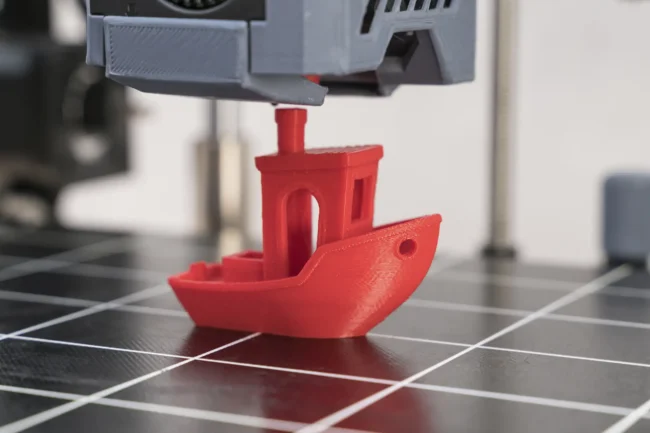
3D printer creating a round plastic object showing the FDM layer-by-layer printing process

3D Printing Layer Height Explained: When to Use 0.08mm, 0.12mm, and 0.20mm

BlogBy Ore FlyJanuary 9, 2025

The Setting That Changes Everything Layer height is one of the most important settings in your slicer. It controls how thick each individual layer of plastic is, and it has a direct effect on print quality, print time, and strength. Change this one number and your prints look dramatically different. Here is everything you need…

What Does “No Supports Needed” Actually Mean in 3D Printing?

BlogBy Ore FlyNovember 21, 2024

The Phrase That Changes Everything If you have spent any time browsing STL files, you have seen it everywhere: “no supports needed,” “support-free design,” “print without supports.” For a beginner, it sounds like a promise. For an experienced printer, it is a design specification that tells you a lot about the quality of the file.…

How to 3D Print Your Own TCG Deck Box: A Complete Guide

BlogBy Ore FlyNovember 7, 2024

Why Print Your Own Deck Box? A mass-produced deck box is fine. A 3D printed deck box is yours. When you print your own TCG deck box, you control the size, the color, the logo, and the details. You can match your sleeve color, print your favorite character’s jolly roger, or build a box that…

How to Slice an STL File for the First Time (Bambu Studio, PrusaSlicer & Cura)

BlogBy Ore FlySeptember 4, 2024

What Slicing Actually Means You downloaded an STL file. You have a 3D printer. Now what? Before any printer can build your model, that STL file needs to be translated into a language the printer understands. That translation is called slicing, and the software that does it is called a slicer. The slicer takes your…

PLA vs PETG: Which Filament Should You Use for Your First 3D Print?

BlogBy Ore FlyJune 12, 2024

The Short Answer Start with PLA. Every time. No exceptions for your first 20 to 30 prints. That is not a knock on PETG. PETG is an excellent material. It is stronger, more heat-resistant, and more flexible than PLA. But those advantages do not matter when you are still learning how to level a bed,…

←1
2345678910
…1112131415←
Ore Fly
Top

©Copyright 2026. Orefly.com

Go to Top